 AI Next Wave
October 22, 2025
The $7.8 Trillion Bet: What Unprecedented AI Infrastructure Investment Reveals About Humanity's Next Decade
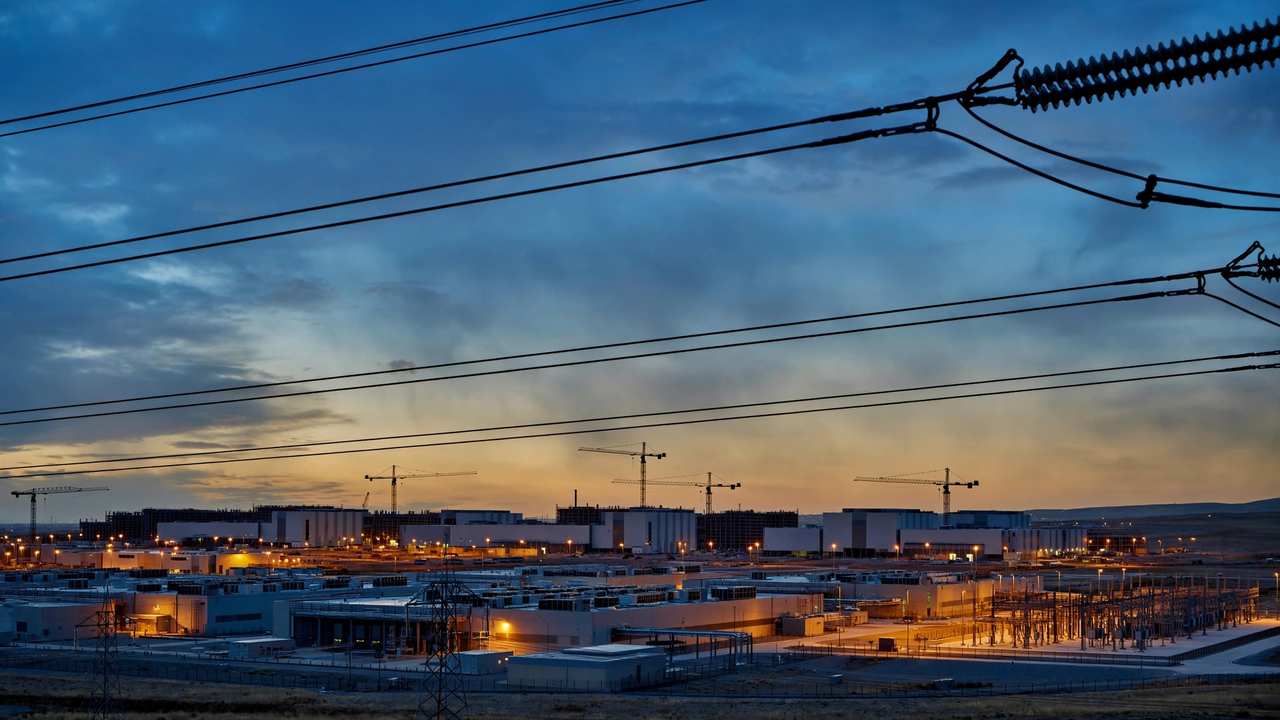
The purchase order that landed on a supplier's desk in September 2025 wasn't unusual, except for the number at the bottom: $3.3 billion. For a single data center campus. In Wisconsin. One of dozens Microsoft is building simultaneously.
What You Need to Know
Hyperscalers: The tech giants (Microsoft, Google, Amazon, Meta) operating massive global cloud infrastructure. Their $360B+ annual spending in 2025 drives the entire AI infrastructure boom.
Data Center CapEx: Capital expenditure on facilities housing AI compute infrastructure. McKinsey projects $6.7 trillion needed by 2030, the largest infrastructure wave in modern history.
Baseload Power: Constant, reliable electricity supply operating 24/7 without interruption. AI data centers require 99.999% uptime; only nuclear delivers carbon-free baseload at this scale.
SMR (Small Modular Reactor): Next-generation nuclear reactors (under 300 MW) designed for faster, cheaper deployment. Tech giants committed $10B+; 22 GW in development targeting 2030.
Grid Interconnection: Process of connecting new large power consumers to the electrical grid. Now the #1 bottleneck, a bigger constraint than chip access.
The Model:
Imagine discovering a manufacturing process that could 10x productivity across every industry, but it requires as much electricity as Japan currently uses, needs continuous operation, and the infrastructure doesn't exist yet.
Do you wait for someone else to build it, or commit billions now knowing competitors are doing the same?
Every major tech company chose the latter. Simultaneously. That coordination reveals what they see: the cost of not investing exceeds the risk of over-investing.
October 2025: When Projections Became Reality
On October 21, NERC's president told federal regulators the grid faced a "five-alarm fire" for reliability. Jim Robb's warning cut through industry jargon: "Reliability remains high, but paradoxically, the risks to reliability continue to mount".
The numbers backed him up. US data centers projected to consume 6.7% to 12% of all US electricity by 2028, up from 4.4% in 2023. The steepest single-sector increase since air conditioning in the 1960s.
Globally, data center electricity consumption will more than double from 415 TWh in 2024 to 945 TWh by 2030 (equivalent to Japan's entire demand), with AI workloads accounting for 35–50%.
The investment response arrived at unprecedented scale:
- Microsoft: $80 billion in fiscal 2025, more than half in the US
- Brookfield-Bloom Energy: $5 billion AI infrastructure partnership announced October 12
- BlackRock-Nvidia-Microsoft-OpenAI: $40 billion revealed as "only 10% of what's coming," scaling to $400 billion
The four largest hyperscalers (Microsoft, Alphabet, Amazon, Meta) collectively spent $245 billion on capital expenditures in 2024, predominantly for AI data centers and computing resources. Forecasts indicate their spending could exceed $360 billion in 2025, a 47% year-over-year increase.
Power became the bottleneck. The IEA estimated accommodating US data center growth requires $16+ billion in new grid investment by 2030. Utilities across 47 companies were forecasting $1.1 trillion in capital investments through 2029.
Scale strained systems immediately. Regions near data centers saw electricity costs rise up to 267% compared to five years prior. Utilities reported quarterly data center pipeline increases of 43% year-over-year, with 1,668 MW absorbed in Q1 alone.
Nuclear power emerged as the only solution. The sole energy source delivering carbon-free baseload at 99.999% uptime AI requires. Tech giants committed over $10 billion to nuclear partnerships. 22 GW of Small Modular Reactors entered global development, targeting 2030 deployment.
Microsoft and Google both announced AI-nuclear integration in October. Microsoft partnered with Idaho National Lab to use AI for nuclear safety reports, accelerating licensing. Google teamed with Westinghouse to make reactor construction "an efficient, repeatable process".
The geopolitical dimension intensified. OpenAI, SoftBank, Oracle, and Microsoft launched Stargate Initiative in January: $100 billion scaling to $500 billion over four years. France countered with $112 billion. China projected $84–98 billion in 2025 (a 48% increase) with $56 billion from government sources.
China approved 10 nuclear reactors in April 2025, $27+ billion investment, explicitly for AI data centers. Nuclear capacity expected to reach 65 GW by end of 2025, scale to 200 GW by 2030, and hit 400–500 GW by 2050. The world's most ambitious nuclear expansion, driven by AI.
Physical constraints became undeniable. Data center developers cited power procurement and grid access as the largest bottlenecks, ahead of chips or land. S&P Global forecast US data centers will require 22% more grid power by end of 2025, nearly triple by 2030 (rising from 61.8 GW to 134.4 GW).
The IEA's April report projected by 2030, data centers will consume 945 TWh, with AI accounting for 200–400 TWh. By 2035: 1,200 TWh, roughly 4% of projected global electricity, making data centers the fourth-largest "country" by electricity use behind only China, the US, and India.
This wasn't gradual adoption. This was emergency mobilization revealing a shared conviction: AI's infrastructure demands represent permanent restructuring of the global energy economy.
Why This Changes Everything
1. The Scale Signals Confidence
When VCs flood a sector, skepticism is warranted. Portfolio theory expects most bets to fail; winners cover losses.
This situation is different.
Microsoft committing $80 billion in one fiscal year (half its annual revenue) isn't a portfolio bet. Google, Amazon, and Meta making similar commitments simultaneously (collectively $360 billion in 2025) isn't speculation. It's strategic necessity.
Dan Ives, Wedbush Securities managing director, compared this to building Las Vegas in the 1950s or Dubai three decades ago: "This AI infrastructure development is laying groundwork for the future economy".
The investment horizon tells the story. SMRs won't come online until 2030. Grid upgrades take 5–7 years. Utilities plan infrastructure decades ahead. Nobody commits $7.8 trillion over six years for technology plateauing in three.
I covered agentic AI in September and earlier this month. Those autonomous systems that can plan, reason, and execute multi-step workflows? They're already being deployed at enterprise scale. Salesforce reporting 46% case deflection rates and 84% faster resolution times. Workday customers reducing contract execution time by 65% and personnel changes by 90%.
Those results are from current infrastructure. Early-generation data centers. Limited compute availability. Constrained model sizes.
Now imagine what becomes possible when the infrastructure being built today comes online. When compute capacity increases 3x by 2030. When reasoning models can scale to problems requiring days of continuous processing instead of minutes. When agentic systems can coordinate across thousands of simultaneous workflows instead of dozens.
The confidence isn't about current AI capabilities. It's about trajectory: what these systems will do in 2027, 2030, 2035 as compute scales.
The first wave (data centers, power, cooling) enables the second: applications generating returns that justify initial investment.
Companies closest to the technology, with internal capability roadmaps and enterprise demand signals, are betting their balance sheets.
2. Physical Infrastructure Is Now the Bottleneck
For the first time in computing history, the limiting factor isn't innovation. It's electricity and cooling.
Wes Cummins, CEO of Applied Digital: "The limiting factor in AI infrastructure deployment is no longer GPU availability, it's lack of data centers".
Power procurement and grid access now cited as bigger bottlenecks than chip access. Moore's Law delivered exponential compute improvements for decades. Now the constraint is how much power utilities can deliver and how fast transmission can be upgraded.
Think back to the AI browsers we discussed. Perplexity's approach to search, Opera's integration of AI-native features, the shift toward agentic browsing experiences. Now, OpenAI's Atlas joining the ranks. Those capabilities require constant connection to powerful language models, real-time processing, persistent context across sessions.
Scale that to billions of users. Every search becomes a complex reasoning task. Every webpage interaction involves multi-step agent workflows. Every browsing session maintains hours of context requiring continuous compute.
The models powering those experiences don't run on smartphones. They run in data centers consuming megawatts of power continuously.
NERC's "five-alarm fire" warning wasn't about future issues. It's current grid strain. Utilities in Virginia, Texas, Oregon, Georgia, and Ohio see gigawatt-scale demand materializing faster than infrastructure can scale.
The response: $1.1 trillion in utility capital investments through 2029 for 47 largest US utilities. Compare that to $178 billion utilities spent on grid upgrades in 2024.
This isn't incremental expansion. This is emergency-scale mobilization.
The nuclear pivot reveals severity. For decades, nuclear was politically toxic, economically uncompetitive, and regulatory nightmarish. Suddenly, tech giants commit $10+ billion to SMR partnerships for reactors delivering power in 2030.
Why? AI data centers require 99.999% uptime (five-nines reliability), and only nuclear delivers carbon-free baseload at that standard. Wind and solar can't. Natural gas contradicts net-zero commitments. Battery storage isn't scalable enough.
A single 5-acre data center augmenting CPUs with GPUs sees energy usage increase from 5 to 50 megawatts, a 10x jump. The largest campuses in development require up to 2,000 MW (2 gigawatts). Some 50,000-acre facilities in planning potentially consume 5 GW.
Perspective: A typical nuclear plant generates roughly 1 GW. The largest data center campuses require the output of five nuclear plants running continuously.
This isn't a software problem. This is physics, and solving it requires rebuilding significant portions of global energy infrastructure.
3. The Geopolitical Stakes: Infrastructure as Strategic Asset
When governments commit tens of billions to AI infrastructure, it's not economic policy. It's national security strategy.
The White House's July 2025 "Winning the AI Race" outlined over 90 federal actions to accelerate deployment, explicitly framing infrastructure as strategic competition. Stargate Initiative's $500 billion buildout over four years positions US technological leadership against China.
China responded immediately. April 2025: 10 new nuclear reactors approved, $27+ billion investment. Total AI investment projection for 2025: $84–98 billion, a 48% increase, with $56 billion from government.
This isn't market competition. This is Cold War-style infrastructure racing.
France's $112 billion investment aims to establish Europe as independent AI power. China's nuclear capacity expansion to 400–500 GW by 2050 explicitly ties to AI data center growth.
The US hosts 5,426 operational data centers (highest globally) consuming 17 GW in 2022, projected to reach 130 GW (1,050 TWh) by 2030, representing nearly 12% of national electricity demand.
Virginia alone, with over 300 data centers, contributes $9.1 billion annually (more than agriculture), demonstrating how AI infrastructure already reshapes regional economies.
The strategic calculus is clear: AI infrastructure determines who leads the next technological era. Countries securing power, building capacity, and deploying at scale will define standards, capture economic gains, and project technological influence.
Countries falling behind won't catch up. Capital requirements and lead times are too great.
This is why simultaneous trillion-dollar commitments happen across US, China, and Europe. Rational competition for existential advantage.
4. The Economic Restructuring Nobody's Talking About
AI infrastructure investment isn't just technology spending. It's fundamentally restructuring how capital flows through the global economy.
Utilities, historically stable slow-growth businesses, are now growth stocks. BlackRock: "If you're bullish on AI adoption, you have to be bullish on power and utilities".
Energy demand growth in the US (flat for two decades) now rises roughly 20% annually through decade's end, driven almost entirely by data centers. Data center electricity demand grows from roughly 4% of current US electricity to 10–12% by 2030.
That's not a niche sector. That's structural transformation.
Wholesale electricity costs have risen as much as 267% over five years in areas near data centers, with costs passed directly to consumers. Residential electricity bills climb faster than inflation nationwide, driven by grid upgrades and power procurement for AI.
President Trump's energy chief said in October 2025 that soaring power bills are now his biggest concern. Trump campaigned on cutting electricity prices in half within 18 months; instead, prices rose since inauguration.
This is AI's hidden cost structure materializing in consumer utility bills, and most people don't realize it yet.
Dan Crane, CEO of Generate Capital and former Biden energy official: "Without mitigation, data centers sucking up all the load will make things expensive for the rest of Americans".
UBS projects global AI investment will reach $375 billion in 2025, exceeding $500 billion by 2026. Ives: "This marks the beginning of trillions invested. This infrastructure development lays groundwork for the future economy".
But who captures the returns?
Winners are clear: hyperscalers, infrastructure owners, utilities, nuclear developers.
The question is who pays: consumers through higher electricity bills, taxpayers through grid subsidies, or enterprises through compute costs?
Right now, the answer is "all of the above".
The 2026–2030 period is the crucial test. Today's massive investments must start generating measurable returns to justify continued capital commitment.
If AI delivers transformative productivity gains, investment pays off and becomes self-sustaining.
If gains are incremental, this becomes the largest capital misallocation in modern economic history.
Infrastructure commitment says the smart money believes transformation is coming and can't afford to be wrong.
What the Infrastructure Reveals
Here's what we know for certain:
- $7.8+ trillion committed to AI infrastructure 2025–2030 (data centers, power, grid, nuclear)
- $360+ billion in annual hyperscaler CapEx by 2025
- Data center electricity consumption doubling to 945 TWh by 2030, equivalent to Japan's total demand
- $1.1 trillion in utility grid investments through 2029
- $10+ billion in nuclear partnerships targeting 2030 deployment
- Simultaneous mobilization across US, China, Europe in Cold War-style infrastructure racing
These are signed contracts, committed capital expenditures, and projects under construction.
If you've been following this series, you understand where this leads. The agentic systems we covered in September need compute to operate at scale. The reasoning models we examined need power to process complex multi-step problems. The AI browsers we explored need infrastructure to deliver real-time experiences to billions of users.
All of that requires the foundation being built right now.
And here's what the scale tells us: the people committing $7.8 trillion aren't building for today's capabilities. They're building for what comes next.
When we discussed agentic AI growing up, we talked about vibe coding getting rails, about enterprises deploying autonomous systems with proper governance. Those early deployments showed what's possible with limited infrastructure.
The infrastructure being built now removes those limits.
Imagine agentic systems with 10x the compute capacity. Reasoning models that can process for days instead of minutes. AI browsers that maintain perfect context across every interaction. Enterprise workflows where hundreds of agents coordinate seamlessly because the underlying infrastructure can handle the load.
That's not speculation. That's what $7.8 trillion of committed capital is designed to enable.
The companies making these investments have information the rest of us don't. Internal AI capability roadmaps. Enterprise pilot results showing what's possible with current constraints removed. Application pipelines waiting for infrastructure to catch up. Strategic forecasts extending to 2035.
They're not gambling. They're securing infrastructure for capabilities they've already seen evidence of internally and can't afford to be late for.
Dan Ives calls this "the beginning of trillions being invested," and he's not exaggerating. The first wave (data centers, power, cooling) enables the second: applications generating returns that justify initial investment.
This is just the tip of the iceberg.
The infrastructure coming online 2026–2028 enables AI capabilities that don't exist yet. The grid upgrades completing by 2030 support compute demands we can't fully anticipate. The nuclear reactors delivering power in 2030–2035 fuel applications we haven't imagined.
Every article in this series has built toward understanding this moment. AI evolving from simple prompts to complex reasoning. Agentic systems moving from concept to enterprise deployment. Browsers transforming from passive tools to active assistants.
All of that was just the prelude of what’s to come.
The real transformation happens when the infrastructure being built today removes the constraints limiting what's possible tomorrow.
What This Means for You
Business leaders: The infrastructure being built reveals what's coming. Hyperscalers committing $360+ billion annually aren't building capacity to sit idle. That compute enables applications that don't exist yet but will by 2027–2030. Your competitors are planning for that future now. The question isn't whether AI transforms your industry. It's whether your infrastructure, talent, and strategy position you for capabilities coming online in 24–36 months.
Investors: Infrastructure investment at this scale creates clear winners: utilities, nuclear developers, data center operators, transmission/cooling providers, specialized REITs. BlackRock calls this a "generational opportunity". The 2026–2030 period tests whether AI delivers transformative productivity. Infrastructure ownership captures upside without direct AI model risk.
Policymakers: Infrastructure being built will reshape regional economies, electricity markets, and employment patterns. Virginia's 300+ data centers contribute $9.1 billion annually, more than agriculture. But residents near data centers see electricity costs rise 267%. Who benefits? Who pays? Those questions need answers before 2030, when infrastructure is operational and consequences locked in. When China commits $98 billion and approves 10 reactors for AI, when US launches $500 billion initiative, when France counters with $112 billion, these are strategic competitions defining the next several decades.
Everyone else: Watch the infrastructure. Companies don't commit $7.8 trillion over six years for capabilities plateauing in three. Utilities don't plan $1.1 trillion in grid upgrades for demand stabilizing. Tech giants don't sign $10 billion nuclear deals for 2030 delivery if uncertain about 2030 demand.
That future arrives in waves: 2026–2027 (data centers under construction come online; grid strain intensifies). 2028–2030 (first SMRs deliver power; grid upgrades complete; AI capabilities scale). 2030–2035 (second wave infrastructure enables full-scale deployment).
The people committing trillions are planning for 2035, when today's infrastructure enables capabilities we can barely imagine.
The question isn't whether AI infrastructure investment is justified. The question is what the builders know that justifies commitments at this scale.
The answer: They've seen enough internally to believe transformation arrives in years not decades, and the cost of falling behind exceeds the risk of over-investing.
That's what $7.8 trillion of spending is signaling.
And this is just the beginning.
References
Infrastructure Investment Analysis:
Yahoo Finance. (2025, October 20). Tech Giants Pour $245 Billion into Data Centers for AI Advancement. https://uk.finance.yahoo.com/news/2025-strategic-intelligence-data-centers-141600993.html
AIX Energy. (2025, October 8). The Age of Compute: How AI and Data Centers Rewired Global Investment. https://www.aixenergy.io/worldinvestment/
McKinsey & Company. (2025, April 27). The cost of compute: A $7 trillion dollar race to scale data centers. https://www.mckinsey.com/industries/technology-media-and-telecommunications/our-insights/the-cost-of-compute-a-7-trillion-dollar-race-to-scale-data-centers
CNBC. (2025, October 17). Utilities are grappling with how much AI data center power demand to expect. https://www.cnbc.com/2025/10/17/ai-data-center-openai-gas-nuclear-renewable-utility.html
Empirix Partners. (2025, February 19). Inside 2025's Already Historic AI Infrastructure Investments. https://empirixpartners.com/the-trillion-dollar-horizon/
Bloom Energy. (2025, October 12). Brookfield and Bloom Energy Announce $5 Billion Strategic AI Infrastructure Partnership. https://investor.bloomenergy.com/press-releases/press-release-details/2025/Brookfield-and-Bloom-Energy-Announce-5-Billion-Strategic-AI-Infrastructure-Partnership/default.aspx
Deloitte. (2025, October 5). Can US infrastructure keep up with the AI economy? https://www.deloitte.com/us/en/insights/industry/power-and-utilities/data-center-infrastructure-artificial-intelligence.html
247 Wall St. (2025, October 21). Blockbuster $40b AI Investment Is Only 10% of What's Coming. https://247wallst.com/investing/2025/10/22/blockbuster-40b-ai-investment-is-only-10-of-whats-coming-nvda-msft-meta-blk-big-40-billion-bet-in-ai/
Energy & Power Infrastructure:
Nature. (2025, April 10). Data centres will use twice as much energy by 2030 — driven by AI. https://www.nature.com/articles/d41586-025-01113-z
Strategic Energy. (2025, April 13). Data center energy consumption will double by 2030: more than 450 TWh needed. https://strategicenergy.eu/data-center/
Carbon Brief. (2025, September 16). AI: Five charts that put data-centre energy use and emissions into context. https://www.carbonbrief.org/ai-five-charts-that-put-data-centre-energy-use-and-emissions-into-context/
IEA. (2025, March 25). Data Centre Energy Use: Critical Review of Models and Results. https://www.iea-4e.org/wp-content/uploads/2025/05/Data-Centre-Energy-Use-Critical-Review-of-Models-and-Results.pdf
S&P Global. (2025, April 9). Global data center power demand to double by 2030 on AI surge: IEA. https://www.spglobal.com/commodity-insights/en/news-research/latest-news/electric-power/041025-global-data-center-power-demand-to-double-by-2030-on-ai-surge-iea
IEA. Energy and AI Report. https://iea.blob.core.windows.net/assets/601eaec9-ba91-4623-819b-4ded331ec9e8/EnergyandAI.pdf
Hyperscaler CapEx & Strategy:
Data Centers. (2025, April 14). Microsoft, Google, AWS: Who's Building the Next Mega Data Center? https://www.datacenters.com/news/microsoft-google-aws-who-s-building-the-next-mega-data-center
Brightlio. (2025, September 26). 6 Data Center Market Trends for 2025. https://brightlio.com/data-center-market-trends/
Yahoo Finance. (2025, October 22). Hyperscale Data Center Market Outlook 2025–2030. https://finance.yahoo.com/news/hyperscale-data-center-market-outlook-080700867.html
Microsoft. (2025, January 2). Microsoft to Invest $80 Billion in Data Centers in Fiscal 2025. https://www.gp-radar.com/article/microsoft-to-invest-80-billion-in-data-centers-in-fiscal-2025
Grid Strain & Utility Response:
Utility Dive. (2025, October 19). Portland General Electric invests in AI-powered flexibility to speed data center connection. https://www.utilitydive.com/news/gridcare-portland-general-pge-data-centers/803097/
Utility Dive. (2025, October 21). NERC president warns of 'five-alarm fire' for grid reliability. https://www.utilitydive.com/news/data-center-grid-reliability-ferc-nerc/803467/
CNN. (2025, October 17). Is AI really making electricity bills higher? Here's what the experts say. https://www.cnn.com/2025/10/17/tech/electricity-bill-price-increase-ai-data-centers
Bloomberg. (2025, September 29). AI Data Centers Are Sending Power Bills Soaring. https://www.bloomberg.com/graphics/2025-ai-data-centers-electricity-prices/
S&P Global. (2025, October 13). Data center grid-power demand to rise 22% in 2025, nearly triple by 2030. https://www.spglobal.com/commodity-insights/en/news-research/latest-news/electric-power/101425-data-center-grid-power-demand-to-rise-22-in-2025-nearly-triple-by-2030
ACEEE. (2025, June 9). Data Center Efficiency and Load Flexibility Can Reduce Power Grid Strain. https://www.aceee.org/blog-post/2025/10/data-center-efficiency-and-load-flexibility-can-reduce-power-grid-strain-and
Reddit. (2025, June 27). Data centers, costly grid upgrades lead to high electricity bills in 2025. https://www.reddit.com/r/energy/comments/1lluqig/data_centers_costly_grid_upgrades_lead_to_high/
Data Center Frontier. (2025, October 5). Utilities Race to Meet Surging Data Center Demand With New Power Models. https://www.datacenterfrontier.com/energy/article/55317213/utilities-race-to-meet-surging-data-center-demand-with-new-power-models
Nuclear Power & SMRs:
Axios. (2025, July 17). Microsoft, Google and others seek to flip the nuclear-AI script. https://www.axios.com/2025/07/17/microsoft-google-nuclear-ai
Nuclear Business Platform. (2025, August 3). Top 6 Ways Leading Nations Are Using Nuclear Energy to Power AI and Data Centers. https://www.nuclearbusiness-platform.com/media/insights/nuclear-energy-to-power-ai
Introl. (2025, August 7). Small Modular Nuclear Reactors Power the AI Revolution 2025. https://introl.com/blog/smr-nuclear-power-ai-data-centers-2025
BBC. (2025, October 15). Why big tech's nuclear plans could blow up. https://www.bbc.com/worklife/article/20251008-why-big-tech-is-going-nuclear
Marketplace. (2025, September 28). Big Tech goes all-in on nuclear as data centers proliferate. https://www.marketplace.org/story/2025/09/29/big-tech-goes-all-in-on-nuclear-as-data-centers-proliferate
Market Analysis & Investment Outlook:
CNBC. (2025, October 14). AI infrastructure boom masks potential U.S. recession, analyst warns. https://www.cnbc.com/2025/10/14/ai-infrastructure-boom-masks-potential-us-recession-analyst-warns.html
Flexential. (2025, April 30). 2025 State of AI Infrastructure Report. https://www.flexential.com/resources/report/2025-state-ai-infrastructure
Market Minute. (2025, October 9). AI Infrastructure Gold Rush: Applied Digital's Surge Signals New Era for Tech Market. https://markets.financialcontent.com/stocks/article/marketminute-2025-10-10-ai-infrastructure-gold-rush-applied-digitals-surge-signals-new-era-for-tech-market
BlackRock. (2025, October 2). The intersection of infrastructure and AI. https://www.blackrock.com/us/financial-professionals/insights/investing-in-ai-infrastructure
GWK Invest. (2025, October 6). When Will AI Investments Start Paying Off? https://www.gwkinvest.com/insight/macro/when-will-ai-investments-start-paying-off/
Workforce & Economic Impact:
AI Agent Store. (2025, October 21). Daily AI Agent News — October 2025. https://aiagentstore.ai/ai-agent-news/2025-october
Salesforce. (2025, October 12). Salesforce Announces the Agentic Enterprise. https://www.salesforce.com/news/press-releases/2025/10/13/agentic-enterprise-announcement/
SSRN. (2025, June 22). AI Job Displacement Analysis (2025–2030). https://papers.ssrn.com/sol3/papers.cfm?abstract_id=5316265
Brookings Institution. (2024, July 8). AI's impact on income inequality in the US. https://www.brookings.edu/articles/ais-impact-on-income-inequality-in-the-us/
AIGN. (2025, October 14). How Can We Balance the Benefits of AI with Potential Job Displacement Without Adequate Compensation? https://aign.global/ai-governance-insights/patrick-upmann/how-can-we-balance-the-benefits-of-ai-with-potential-job-displacement-without-adequate-compensation/
Hyperight. (2025, April 24). 5 Reasons Why Agentic AI Will Transform Industries by 2030. https://hyperight.com/5-reasons-why-agentic-ai-will-transform-industries-by-2030/
SandTech. (2025, May 29). AI and the Future of Work: Insights from the World Economic Forum's Future of Jobs Report 2025. https://www.sandtech.com/insight/ai-and-the-future-of-work/
McKinsey & Company. (2017, November 27). Jobs lost, jobs gained: What the future of work will mean for jobs, skills, and wages. https://www.mckinsey.com/featured-insights/future-of-work/jobs-lost-jobs-gained-what-the-future-of-work-will-mean-for-jobs-skills-and-wages
IBM. (2025, October 9). Agentic AI's strategic ascent: Shifting operations from automation to autonomy. https://www.ibm.com/thought-leadership/institute-business-value/en-us/report/agentic-ai-operating-model
AI Governance & Standards:
TrustCloud. (2025, April 29). The 2025 CISOs' Guide to AI Governance. https://www.trustcloud.ai/the-cisos-guide-to-ai-governance/
AI21 Labs. (2025, September 28). 9 Key AI Governance Frameworks in 2025. https://www.ai21.com/knowledge/ai-governance-frameworks/
IBM. (2025, March 20). The evolving ethics and governance landscape of agentic AI. https://www.ibm.com/think/insights/ethics-governance-agentic-ai
PBS NewsHour. (2025, September 5). How AI infrastructure is driving a sharp rise in electricity bills. https://www.pbs.org/newshour/show/how-ai-infrastructure-is-driving-a-sharp-rise-in-electricity-bills