 AI Next Wave
July 24, 2026
The AI boom is becoming a neighborhood issue.
Alphabet's (Google) cash flow went negative as infrastructure spending surged. From Eatonville to Malaysia, communities are asking how much data centers consume, who pays, and what local people receive in return.
The short version
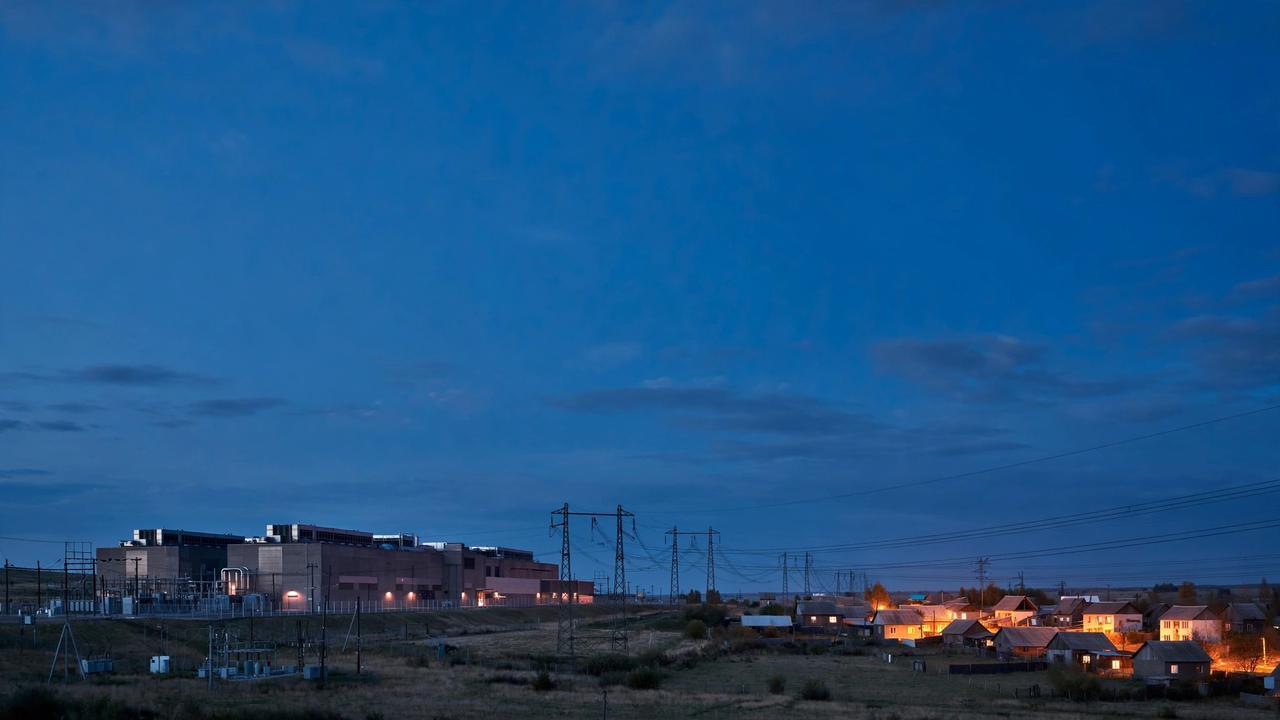
Most people will never see the computers running an AI model. They may see the data center from the highway, the new substation near a neighborhood, or a change in the local debate over electricity and water.
Those physical and financial costs are getting harder to ignore.
Alphabet (Google) brought in $119.8 billion during the second quarter and grew Google Cloud revenue by 82%. Heavy spending on property and equipment still pushed quarterly free cash flow to negative $5.9 billion. Intel's revenue climbed 25% as AI demand lifted its data-center business, while Nvidia committed $1.5 billion to expand advanced chip packaging and testing with Amkor in the United States.
Communities are meeting that expansion at ground level. The White House expanded a voluntary pledge intended to keep data-center infrastructure costs off household power bills. Florida has enacted its own large-load protections. In Eatonville, near Winter Park and visible from Interstate 4, residents are asking for details about a nearly completed HostDime facility's electricity, water, noise, utility costs, and appearance. Malaysia is facing similar resistance after attracting tens of billions of dollars in data-center investment.
India's reported financial-identity rollout adds another side of the infrastructure story. Banks and insurers are expected to begin using a common digital identity record in August. The registry already holds about 1.2 billion records, yet duplicates and missing information have limited its usefulness.
AI and digital services arrive through systems that have to be financed, powered, built, maintained, trusted, and accepted by the people living around them. Today's news puts those systems in plain view.
Work, money & the price of scale
Alphabet's AI growth came with a $5.9 billion cash deficit
Alphabet had a strong second quarter by several familiar measures. Revenue rose 24% to $119.8 billion. Operating income increased 30% to $40.8 billion. Google Cloud revenue reached $24.8 billion, up 82%, as customers bought more cloud and AI infrastructure and services.
The cash-flow statement tells investors how expensive that growth has become.
Alphabet generated $39.1 billion in operating cash and spent $44.9 billion on property and equipment. Its free cash flow, which subtracts those purchases from operating cash, landed at negative $5.855 billion. Reuters described it as the company's first quarterly cash burn on record and reported that Alphabet raised its 2026 capital-spending forecast by $15 billion.
Alphabet remained profitable, and its operating margin expanded to 34%. A single quarter can't determine the return on facilities and equipment designed to operate for years. The cloud growth shows that customers are buying capacity. The negative free cash flow shows how far the checks can run ahead of the payoff.
The lesson travels well beyond Big Tech. AI pricing often begins with a license or a usage fee. Production costs can include data preparation, integration, security reviews, evaluations, employee training, human review, monitoring, and capacity for traffic spikes. A customer-facing product may also need a backup provider so a regional outage or capacity shortage doesn't stop the service.
A tool that saves five hours creates capacity. Cash returns only when the organization uses that capacity to reduce another expense, complete more paid work, improve retention, or prevent a measurable loss. Quality improvement and strategic learning can also be valuable. They should be named and measured separately.
A practical test starts with one recurring workflow. Record its labor time, correction rate, delay cost, and completed volume before adding AI. Include every cost of the new version, especially review time and error correction. Compare the corrected result after 30 days. Faster drafts and high usage may support the case, but they can't prove the return on their own.
Infrastructure on your commute
Data centers have moved from the cloud into local politics
The White House expanded its voluntary Ratepayer Protection Pledge on Thursday to include more governors, utilities, cooperatives, and data-center developers. Signatories commit to obtain the power their facilities need, pay for grid upgrades, use separate rate structures, and continue paying for infrastructure built on their behalf even if they use less electricity than expected.
The promise addresses a growing fear. Large facilities can require new generation, substations, and transmission lines. Households and small businesses want assurance that those costs won't surface in their monthly bills.
The pledge remains voluntary. Reuters and the Associated Press reported skepticism from consumer advocates and policy experts who say enforcement still depends on state regulators, utility agreements, and transparent rate proceedings. A signature expresses intent. Approved tariffs and actual bills will show what customers pay.
Florida has chosen a legal route. Governor Ron DeSantis signed SB 484 in May, and most of the law took effect July 1st. It preserves local authority over planning and land use, creates a distinct water-permitting process for large-scale data centers, and requires the Public Service Commission to establish tariffs designed to make large-load customers cover their own service costs. Public utilities must file those tariffs for approval by October 1st.
That statewide debate is easy to see in Eatonville.
HostDime is finishing a roughly 100,000-square-foot data center and headquarters on Wymore Road, beside Interstate 4 and near the Winter Park border. The orange-and-glass building rises above the surrounding roads and neighborhoods. HostDime says the facility is scheduled for completion in the third quarter of 2026.
Local reporting from WESH and ClickOrlando found residents asking about electricity, water, noise, utility costs, environmental effects, and the building's appearance. The Eatonville Town Council decided in June that it could gather information and organize public meetings without adopting a formal resolution.
The facility was planned years before today's generative-AI surge. HostDime describes it as a cloud, colocation, and interconnection facility rather than a dedicated AI training campus. Its relevance comes from the same local concerns now surrounding the broader data-center buildout. Digital infrastructure occupies real land, connects to real utilities, and sits beside real communities.
The Eatonville project also shows why photographs and architectural renderings tell only part of the story. A polished building can fit beside an interstate and still leave residents without clear figures for peak power, annual electricity use, water demand, backup generation, noise, permanent jobs, and responsibility for utility upgrades.
Malaysia is dealing with those questions at a much larger scale. Johor attracted about $35 billion in data-center investment after Singapore restricted new development. Reuters reported that residents protested a complex in February over construction dust, water pressure, and resource use, marking the country's first public resistance to a data-center project. The developer told Reuters that its facility hadn't caused the reported water problems.
The comparison needs proportion. Eatonville's HostDime facility is far smaller than the hyperscale campuses driving much of Asia's growth. The public expectations are similar. Communities want project-level evidence before they accept years of construction, infrastructure demands, and environmental tradeoffs.
Developers can build trust by publishing the load profile, water source, cooling method, noise controls, grid-upgrade obligations, emergency plan, tax terms, and expected permanent employment. Local hiring promises become credible when they include specific roles, wages, training partners, and dates.
Cloud customers have a stake too. Capacity shortages can delay launches or raise prices. Teams running important workloads should know where a service operates, which region can handle a failure, and whether a smaller model, caching, or scheduled batch work can reduce demand without hurting the result.
The factory behind the model
Intel and Nvidia are spending on the parts most people never see
AI hardware depends on a chain of components and services extending well beyond the graphics processor.
Intel reported second-quarter revenue of $16.1 billion, up 25% from a year earlier. Its Data Center and AI segment reached $6.3 billion, a 59% increase. The company forecast third-quarter revenue of $15.8 billion to $16.8 billion and raised its 2026 capital-spending plan to $20 billion as demand continued to exceed supply.
The quarterly revenue and segment growth are reported results. The third-quarter range and future demand are forecasts. Intel also recorded an $11 billion GAAP net loss that largely reflected a noncash mark-to-market adjustment tied to shares escrowed under a US government agreement. That accounting item shouldn't be confused with the operating demand described in the company's results.
Central processing units handle general server work around AI accelerators, including data preparation and orchestration. The rise in Intel's data-center sales shows how AI demand spreads across an entire computing system.
Nvidia's agreement with Amkor exposes another hidden constraint. Nvidia will prepay $1.5 billion under a multiyear deal to expand US advanced packaging and testing, including work in Arizona. Advanced packaging combines several pieces of silicon into a tightly integrated unit, then tests whether the finished system performs as designed.
The payment is a signed capacity commitment. Its return will depend on production yields, customer orders, and sustained demand. Both companies benefit from a continuing AI buildout, so their expectations should be treated as commercial positions rather than independent proof of future demand.
The workforce opportunity stretches well beyond model development. Chip and packaging plants need process technicians, equipment maintenance, quality inspection, chemical handling, thermal engineering, logistics, and safety expertise. Regional colleges can ask employers for exact roles, certifications, hiring dates, and wage ranges before building new programs.
Job placement, wages, retention, and advancement will show whether local workers benefited. Enrollment figures and ribbon cuttings won't.
Smaller industrial suppliers can enter through precision work these plants need. Calibration, contamination control, component inspection, maintenance scheduling, and worker training can become valuable services. A provider still has to prove that its work reduces downtime, defects, or production delays inside a real facility.
Identity, access & everyday technology
India may let one verified identity record travel across finance
Indian banks and insurers are preparing to use a common customer-identification system beginning in August, according to two regulatory sources and industry executives who spoke with Reuters. Mutual funds and brokerages are expected to join later in the year.
Central Know-Your-Customer 2.0 would let a financial institution retrieve a person's verified record from a central registry after receiving consent through a one-time password. A customer could open or update accounts without repeatedly submitting the same identity documents.
The regulators contacted by Reuters haven't publicly announced the rollout, and the officials who described it weren't authorized to speak on the record. The August timing remains reported rather than final until the agencies publish it.
India's existing registry holds about 1.2 billion records. Banks have made limited use of it because of duplicates, missing details, and inconsistent data quality. The new version is expected to add a confidence score and identify the organization that verified each record.
A dependable system could reduce paperwork, lower onboarding costs, and make insurance or investing easier to access. It could also help institutions identify suspicious activity across accounts.
Centralization concentrates sensitive information and magnifies the cost of a mistake. People need narrow consent, strong access controls, a record of who retrieved their data, and a fast way to correct inaccurate information. A confidence score can guide a review. It shouldn't become an unexplained barrier that blocks someone from an account or financial product.
The rollout should be judged through onboarding time, duplicate-record rates, fraud losses, customer complaints, false rejections, and correction time. A rising count of opened accounts would show reach without proving accuracy or fairness.
Opportunity radar
Independent data-center impact reviews
Local governments, neighborhood groups, utilities, and developers often enter a data-center debate with different numbers and little shared language. Energy consultants, land-use specialists, civil engineers, and public-engagement firms could offer independent project reviews that translate technical filings into practical local effects.
A credible engagement would examine expected electric load, water demand, cooling, noise, backup generation, grid upgrades, tax terms, emergency planning, and permanent employment. A municipality or developer might pay for a clearer approval process. A community organization might seek grant or philanthropic support for an independent review.
The service needs access to engineering assumptions and utility data. A generic impact report or a polished public meeting won't settle the issue. Its value comes from specific figures, disclosed uncertainty, and commitments that can be tracked after the facility opens.
Identity-data cleanup and consent design
Shared identity systems expose records that are incomplete, duplicated, or difficult to correct. Financial institutions, insurers, and public agencies need data-quality specialists, privacy engineers, and service designers who can repair records without creating more friction for customers.
A useful engagement could focus on one onboarding journey and measure duplicate resolution, consent completion, false rejection, and correction time. The work earns its cost when it improves access and reduces fraud or manual review. A redesigned screen can't repair a bad registry by itself.
What you can do with this
If you're paying for AI at work
Choose one tool and follow the money for a month. Record license and usage charges, integration work, employee review time, and the cost of fixing errors. Compare that total with completed work, added capacity, lower risk, or new revenue. Keep time saved separate from cash returned.
If a data center is proposed near you
Start with the project record and the utility docket. Look for peak power, annual electricity use, water source, cooling design, backup generation, noise limits, grid-upgrade responsibility, tax terms, and permanent jobs. Ask which commitments appear in permits or rate agreements and which remain voluntary.
If you work in local government or community advocacy
Translate the proposal before taking a position. Publish the developer's figures, the utility's assumptions, and the unanswered questions in plain language. Record who will verify each promise after construction and what remedy exists if performance differs.
If you build digital services
Design the correction path alongside the sign-up path. Let people see which identity data was used, give them a way to challenge it, and keep an audit record of consent. Faster onboarding loses value when an error takes weeks to repair.
The bigger picture
AI's infrastructure is becoming visible through cash-flow statements, power contracts, construction sites, factories, and public meetings.
Alphabet can produce strong revenue growth while spending more cash on property and equipment than its operations generated during the quarter. Intel and Amkor can gain from AI demand through processors and packaging that most users will never see. India can make financial services easier to enter while accepting responsibility for the accuracy of a vast identity registry.
Eatonville brings the physical side close to home. The bright orange HostDime building beside I-4 makes cloud infrastructure look tangible. The unanswered questions around power, water, noise, costs, and local benefit make it tangible in another way.
These projects can create useful services, skilled work, tax revenue, and better digital access. They also make long-term claims on land, utilities, and public trust. Communities deserve measurable commitments before approval and transparent results after opening. Developers deserve rules clear enough to plan against. Ratepayers deserve protection that holds up on an actual bill.
The people building the surrounding system have growing influence. Technicians keep chip and data-center equipment running. Consultants can test AI costs or translate infrastructure proposals. Privacy engineers can make shared identity safer. Local officials can turn broad promises into permits, tariffs, and reporting requirements.
Technology earns support when people can see the benefit, understand the cost, and hold someone accountable for the outcome.
References
Alphabet: Second-quarter 2026 financial results and free-cash-flow reconciliation, July 22, 2026
Reuters: Alphabet's negative quarterly free cash flow and higher AI infrastructure spending, July 23, 2026
White House: Terms of the voluntary Ratepayer Protection Pledge
Associated Press: Expansion of the data-center ratepayer pledge and questions about enforcement, July 23, 2026
Reuters: Consumer skepticism and cost concerns surrounding the voluntary data-center pledge, July 24, 2026
Florida Senate: Enacted SB 484 status, effective date, and official bill history
Florida Senate: Official summary of the large-load tariffs, local authority, and water-permitting provisions in SB 484
ClickOrlando: Eatonville seeks transparency on HostDime's power, water, noise, and community effects, June 16, 2026
WESH 2: Eatonville residents raise concerns about the nearly completed HostDime facility, June 17, 2026
HostDime: Current specifications and third-quarter 2026 target for its new Orlando-area facility
Reuters: Malaysia's data-center growth, community protests, and resource pressure, July 24, 2026
Intel: Second-quarter 2026 financial results and third-quarter guidance, July 23, 2026
Reuters: Intel's reported results, capital-spending increase, and data-center demand, July 23, 2026
Reuters: Nvidia and Amkor's US chip-packaging and testing agreement, July 23, 2026
Reuters: Reported August rollout of India's Central Know-Your-Customer 2.0 system, July 24, 2026