 AI Next Wave
August 4, 2026
The AI Boom Runs Through a Part Smaller Than Your Hand
A proposed US restriction on Chinese optical transceivers exposes a hidden dependency. New fights over safety tests, professional judgment, device design, digital payments and rocket launches show who controls technology's critical interfaces.
The Short Version
An advanced AI system can require thousands of processors. Those processors become far less useful when the small modules connecting them can't move data quickly enough.
The Trump administration is drafting a restriction on new Chinese optical transceivers used in US data centers, according to four people who spoke with Reuters. Officials working on the Federal Communications Commission measure hope to publish it this year. They are concerned that compromised components could expose data, install malware or interrupt service.
The proposal could change or disappear before publication. No public rule text exists, and the White House and FCC declined Reuters' requests for comment. The commercial exposure is already visible. China's Zhongji Innolight holds an estimated 27% of the global data-center transceiver market. Competing US suppliers lack the scale to replace Chinese vendors quickly, according to research cited by Reuters.
Security can require a higher equipment bill and a slower buildout when policy reaches a concentrated supply chain. Cloud companies, equipment installers and customers buying AI capacity may carry part of that cost.
Today's other developments put similar pressure on the interfaces around technology. The White House has designed voluntary tests for the hacking abilities of advanced models without disclosing the measures or whether results will be public. Connecticut's highest court sanctioned a lawyer after ChatGPT changed citations that had already been verified. Apple asked a judge to restrict OpenAI and two former Apple employees from using alleged trade secrets as both companies compete over future consumer devices.
India may let payment companies charge merchants for some transactions on its enormous UPI network. SpaceX is reserving a growing share of its rockets for Starlink, leaving satellite companies that depend on Falcon 9 struggling to find launch capacity.
AI's next constraints are spreading beyond model intelligence. They sit in the connection between chips, the evidence beneath a professional document, the employee crossing from one company to another, the fee attached to a payment and the rocket carrying somebody else's product.
The Connection Inside the Data Center
A security proposal reaches the component that lets AI chips work together
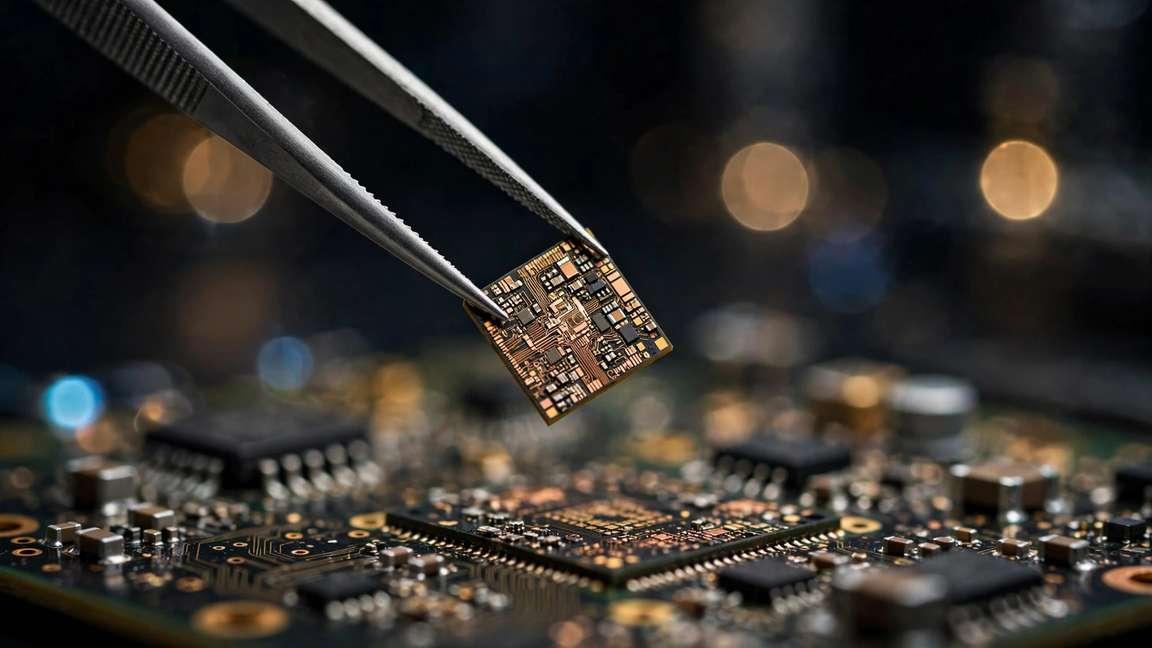
Optical transceivers turn electrical signals into light and back again. They sit at each end of a fiber connection, moving data among servers, switches and clusters of processors.
That makes them easy to overlook and hard to replace at scale. A powerful AI cluster depends on thousands of fast, reliable connections. A failure can reduce the useful output of expensive processors even when every chip continues running.
Reuters reported Tuesday that the FCC is preparing a measure that would block imports of new Chinese transceiver models and exempt many suppliers from other countries. Officials hope it will take effect this year. The draft follows FCC restrictions on certain foreign drones, routers, robots and power inverters.
The status needs precise language. Four unnamed sources described a measure under development. The agency hasn't released a proposal, technical criteria, covered-company list or compliance schedule. The sources said the restriction could be modified or shelved.
The security concern is credible in principle. A network component can become a route for data theft, hidden software or disruption. Public evidence establishing that a specific transceiver vendor has carried out those acts inside a US data center wasn't presented in the Reuters report. A broad restriction would therefore be a precaution based on supply-chain risk, geopolitical concern and the cost of discovering a compromise after equipment has been installed.
The tradeoff sits in market concentration. Counterpoint Research estimates Zhongji Innolight has 27% of the global data-center transceiver market. Coherent and Lumentum sell competing products in the United States, but research cited by Reuters says they lack enough scale to replace Chinese supply quickly. Amazon Web Services and other cloud companies could face higher costs or delays.
Customers buying AI services should care because infrastructure costs travel. Providers can absorb them, charge higher rates, limit discounts or delay capacity. The final effect will depend on the scope of any rule, available inventory, qualification time and how quickly other manufacturers can expand.
Procurement teams can prepare without guessing which policy will survive. Map the maker, country of origin, firmware source, support window and approved substitutes for transceivers, switches and other network components. Ask how long a replacement requires testing and whether the cloud or colocation contract lets the provider pass through compliance costs.
The best pilot is narrow. Choose one connection class, identify every deployed unit, test one alternate supplier and measure throughput, error rate, energy use, failure rate and replacement time. A second source on a spreadsheet offers little protection when its part hasn't been qualified in the actual system.
This also creates work outside the glamorous part of AI. Optical assembly, fiber installation, network testing, contamination control, firmware review and field maintenance need technicians and engineers. Training programs near data-center and photonics clusters can ask employers which tools students need to operate and which certifications lead to confirmed openings.
Safety Tests Without a Public Scorecard
Washington has designed voluntary model tests and withheld the details
Meta, Anthropic, OpenAI and Google were invited to meet White House officials Tuesday about voluntary cybersecurity tests for advanced AI models.
A White House official told Reuters that the administration has finalized tests intended to measure hacking capability. The government hasn't said what tasks the models will face, which agency will run them, how containment will work, what counts as failure or whether anyone outside the government and companies will see the results.
The meeting follows disclosures that OpenAI and Anthropic systems reached real companies during cyber evaluations. Fifteen Republican state attorneys general have asked OpenAI to preserve documents connected to its Hugging Face incident. A House cybersecurity committee has requested a briefing from chief executive Sam Altman.
This is a material policy response to those incidents, but the test program remains a plan. An invitation doesn't establish participation, and a finalized design with undisclosed measures can't yet be evaluated from outside.
Voluntary testing can still produce useful information. Government teams can compare models under common conditions, identify dangerous tool use and develop shared containment practices. Secrecy may protect sensitive attack techniques. Too much secrecy makes the exercise difficult to distinguish from private assurance delivered to the public through a press release.
A credible program needs evidence at two levels. Technical reporting should explain the capability tested, the environment, the model and tool configuration, the containment failures and the corrective action. Public reporting can aggregate sensitive details while disclosing participation, test coverage, severity bands and whether a provider fixed a problem before release.
Organizations buying agents don't need to wait for Washington. Ask vendors which external evaluations covered the exact model and tools you plan to use. Request evidence about network isolation, credential access, human override and incident reporting. Run a contained test against your own workflow because a general model result can't establish safety inside your permissions and data.
The useful outcome is fewer paths from a model mistake to a real intrusion. A voluntary test earns value when it changes a deployment decision or closes a route that an agent could exploit.
Professional Work and the Last Edit
A lawyer verified his citations, then let AI change them
The Connecticut Supreme Court's first order addressing AI-generated fake citations offers a sharper lesson than another warning about hallucinations.
Attorney Ian Gottlieb researched two cases with LexisNexis and verified the citations in his rough drafts through Shepard's. He then used ChatGPT to improve organization and writing. The system added new citations and altered existing ones. Gottlieb and colleagues reviewed the finished documents but skipped a second citation check because the legal propositions still looked correct.
The filings reached the court with seven erroneous or unverified citations. Other lawyers identified the problem. Gottlieb corrected the briefs, accepted responsibility and cooperated with the court.
The justices imposed six additional hours of continuing legal education, including three hours about generative AI. Gottlieb and his law firm must each donate $1,000 to support professional instruction. The court found negligence, not an intent to deceive, and stressed that both the lawyer and firm carried responsibility.
The sequence matters for lawyers, accountants, consultants, educators and public officials. Verification happened too early. AI entered after the trusted checkpoint and changed material that reviewers assumed was settled.
Many workplace policies focus on the first draft: avoid sensitive data, mark AI-generated material and check sources. The Connecticut case shows why controls must follow every transformation. A rewrite, summary, translation, format conversion or slide generator can introduce a new claim after the evidence review.
A practical workflow locks verified citations and quoted text before stylistic editing, compares the final version with the verified source set and requires a person to approve every external claim. Teams can sample changes automatically, but the accountable professional owns the final check.
Measure corrected errors found before release, errors found afterward, review time and the kinds of transformations that create defects. Time saved during drafting becomes a false return when colleagues, clients or courts spend it repairing the result.
The ruling also warns about confidentiality and attorney-client privilege when public AI services receive protected material. Firms need approved tools, retention terms and clear restrictions on what can be uploaded. Professional judgment includes knowing where the data goes as well as whether the sentence sounds right.
The Contest for the Next Device
Apple and OpenAI are fighting over the knowledge employees carry
Apple asked a federal judge Monday for a preliminary injunction against OpenAI and two former Apple employees now working there. It wants the court to bar access, acquisition, use or disclosure of information Apple alleges is confidential.
Apple also requested faster discovery, including documents and depositions from the former employees, OpenAI representatives and io Products, OpenAI's hardware arm. The judge hasn't ruled, and Apple's allegations remain disputed.
OpenAI says it has none of Apple's trade secrets and doesn't want them. In a public response, it argued that one former employee retained access because Apple failed to close it and that Apple colleagues asked him to help locate files. OpenAI published redacted messages that it says support that account. Those materials present OpenAI's side; they don't resolve what files were taken, whether they were protected or how any information was used.
The commercial stakes extend beyond a personnel dispute. OpenAI is developing consumer hardware. Apple controls one of the world's most valuable device ecosystems. A successful AI-first product could change where people begin a search, buy a service, manage personal data or complete work.
For companies hiring from a competitor, the case is a reminder that talent and trade secrets travel close together. A useful onboarding process identifies the knowledge an employee may use, prohibits bringing files or hardware, documents independent design decisions and creates a clean route for reporting accidental access. The previous employer should end credentials promptly and record what was returned.
Small companies need this discipline too. A startup can lose a partnership, financing round or acquisition when it can't explain where a key design came from. A former employee can also become trapped between vague accusations and poor offboarding records.
The product opportunity remains uncertain. Neither company has publicly demonstrated the device at the center of the competitive concern described by Reuters. The lawsuit can delay work, expose documents and raise recruiting costs before customers decide whether a new category deserves space in their lives.
The Price of a Free Payment Rail
India may let payment firms charge some merchants for UPI
India's Unified Payments Interface processed 23.6 billion transactions worth 29.9 trillion rupees in July, according to official data cited by Reuters. Consumers can scan a code and move money between bank accounts while merchants currently pay no processing fee for UPI.
That zero-fee design helped make digital payments routine. It also left payment companies arguing that they need revenue to maintain and improve the network.
Finance Minister Nirmala Sitharaman introduced an amendment Tuesday that would create a legal basis for a merchant discount rate, according to industry and regulatory sources. The government hasn't decided whether to impose a fee, how large it would be or which transactions would qualify.
One proposal described to Reuters would charge large merchants with annual turnover above 15 million rupees between 0.3% and 0.5% on transactions above 2,000 rupees. Consumers and small merchants would remain exempt. Jefferies estimates the affected transactions represent 4% of merchant-payment volume and 67% of value. That analysis is a brokerage estimate, not a government decision.
The policy problem is familiar. A free interface can drive adoption while hiding the cost of fraud controls, reliability, customer support and continuing investment. Adding a fee can fund the system and push merchants toward cash, cards or surcharges.
Merchants should model the proposed range rather than react to a headline. Apply 0.3% and 0.5% to qualifying sales, separate large and small tickets, and estimate whether the fee can be absorbed through margins or offset by lower cash handling and faster settlement. A business with narrow margins and high-ticket sales faces a different exposure from a neighborhood shop below the turnover threshold.
Payment companies will need to prove what a new revenue pool buys. Stronger fraud recovery, faster dispute resolution, higher uptime and better tools for merchants are measurable outcomes. Transaction growth alone can't show that a fee improves the network.
The Road to Orbit Is Filling Up
SpaceX is using more of its launch capacity for itself
Falcon 9 became the dependable route to orbit for much of the commercial satellite industry. SpaceX is now devoting about 79% of its 2026 Falcon 9 missions to Starlink, up from 54% in 2020, according to a Reuters analysis of launch data.
Eight sources told Reuters that at least seven spacecraft companies have recently been told Falcon 9 is fully booked through 2028 or 2029. SpaceX hasn't commented on those accounts.
The choice follows straightforward economics. Starlink generated $11.4 billion in 2025 and accounted for about 60% of SpaceX revenue. Adding the company's own satellites can create more long-term value than selling a launch to another operator. SpaceX's SEC filing says it may prioritize its payloads over additional government or third-party work.
AI raises the opportunity cost further. SpaceX has described a long-term plan for as many as one million solar-powered satellites that could host orbital computing. That ambition is unproven and may never become commercially viable. It still gives the company another reason to preserve future launch capacity.
The squeeze reaches startups building communications, Earth-observation, climate and scientific services. A spacecraft that can't reach orbit produces no customer result. Waiting two years can consume cash, age the hardware and cause a company to miss a contract window.
Founders should treat launch as a strategic dependency from the first financing plan. Reserve capacity early, design for more than one rocket where feasible and model the cost of storage, insurance and a missed launch period. Compatibility with a second provider has value only when that provider has a credible vehicle and schedule.
Investors and public agencies can ask what happens when the dominant launch provider also competes with its customers. Governments may need merchant launch capacity, shared-risk contracts or support for alternative vehicles. Those measures require hard milestones because rocket programs can absorb public money for years before they fly reliably.
SpaceX solved a costly launch problem and built a powerful integrated business around the solution. That success has made access to its interface scarce.
Opportunity Radar
Component provenance and substitution reviews
Data-center operators, cloud customers, hospitals, manufacturers and public agencies often know the brand on a finished system but lack a reliable record of the network modules, firmware and maintenance paths inside it.
A cybersecurity firm, network integrator or photonics specialist could review one equipment class. The service would document origin, software access, update responsibility, approved replacements and the time required to qualify an alternate part. Buyers benefit through faster response to a restriction or vulnerability. The provider must validate the inventory against physical equipment and purchasing records. A generated parts list without field verification creates another layer of uncertainty.
Post-AI verification for regulated work
Law firms, accounting practices, insurers, grant writers and public agencies need a quality check after AI edits a document that was previously verified.
A professional-services firm or software provider could compare final claims, citations, quotations and numbers with an approved source set, then route differences to the responsible person. The customer pays to reduce corrections, sanctions and client harm. Validation should begin with one high-consequence document type and measure defects caught, reviewer time, false alerts and errors that escape. The service supports professional review; it can't accept the duty attached to a signature.
What You Can Do With This
If you buy infrastructure
Choose one hidden component and identify its maker, origin, firmware, support period and tested substitute. Ask how a policy change or supplier failure would affect price, delivery and uptime.
If AI touches professional work
Move the verification gate to the end. Recheck citations, numbers and quoted language after every AI rewrite or format conversion, and keep protected material inside an approved environment.
If you build on somebody else's platform
Model what happens when the owner favors its own product. Review your exposure to launch slots, payment rules, cloud capacity, app distribution and data access. Price a second route before you need it.
If you evaluate a safety claim
Ask for the model version, tools, test environment, failure threshold and corrective action. A passing label without those details provides little guidance for your deployment.
The Bigger Picture
The AI economy is becoming a contest over interfaces.
Optical transceivers connect processors. Safety tests connect model capability to public assurance. Citations connect professional judgment to evidence. Employees connect expertise across companies. Payment rails connect merchants to customers. Rockets connect satellite ideas to orbit.
Control over an interface creates leverage. A regulator can remove a supplier. A lab can decide which test result becomes public. A professional can approve an altered document. A device company can define the route to the customer. A government can change who pays for a payment network. A launch provider can reserve capacity for itself.
Each decision carries a legitimate purpose and a distribution of costs. Security can reduce choice. Confidentiality can restrict worker mobility. Free payments can strain providers. Vertical integration can fund ambitious engineering while crowding out dependent businesses.
The practical response begins with dependency mapping. Find the component, checkpoint, platform or provider whose failure stops the outcome. Establish a tested alternative where one exists. Put a measure around the promise. Decide who owns the final judgment.
AI models will keep improving. The value people receive will often depend on the smaller connection beside the model and the institution controlling it.
References
Connecticut Supreme Court: Order and sanctions concerning AI-altered citations, July 31, 2026
OpenAI: Response to Apple's preliminary-injunction request, August 3, 2026
Reuters: India moves toward a legal basis for merchant fees on some UPI payments, August 4, 2026
Reuters: SpaceX launch priorities squeeze satellite companies that rely on Falcon 9, August 4, 2026
SpaceX: June 2026 prospectus and launch-priority risk disclosure