 AI Next Wave
August 17, 2026
America Says Pick an AI Side. A Trump-Linked Business Picked Both.
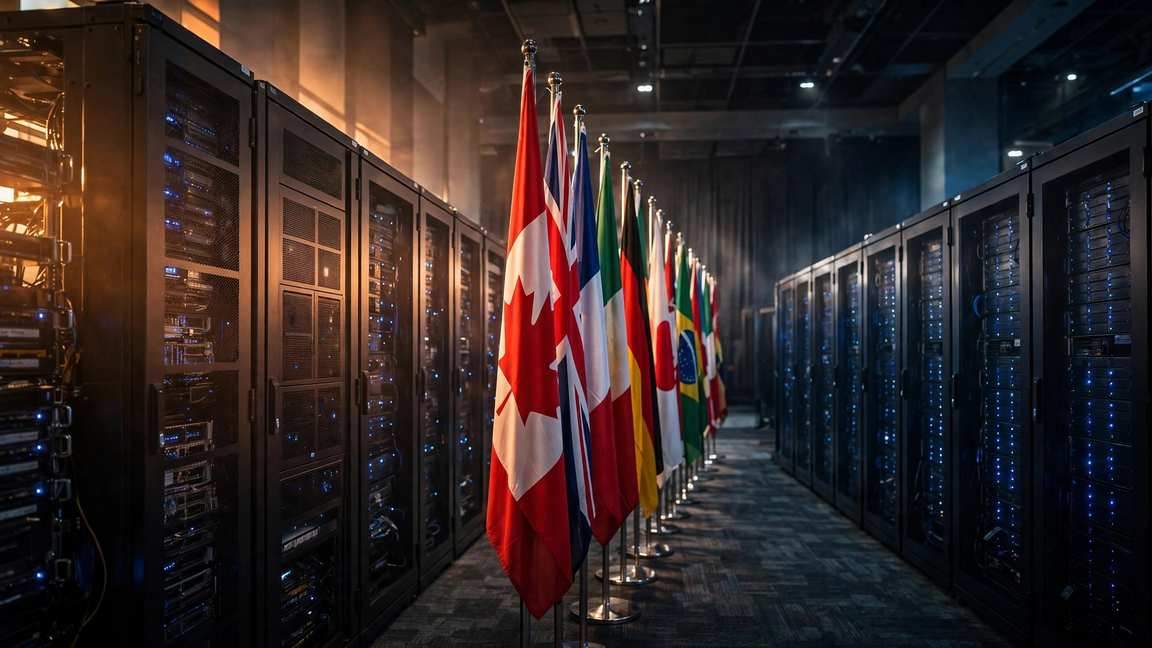
Washington is preparing to press partner countries to choose between U.S. and Chinese AI ecosystems. WorldClaw sells access to models from both and accepts a stablecoin tied to the Trump family.
The Short Version
The United States is preparing to tell dozens of partner countries that they can’t join its AI coalition while also participating in China’s competing initiative, according to an internal State Department draft reviewed by Reuters.
At the same time, World Liberty Financial, the crypto business backed by President Donald Trump and his family, is working with WorldClaw, a Hong Kong AI gateway that sells access to American and Chinese models. Reuters found that 43 of the 90 models on WorldClaw’s website came from Chinese companies that the Trump administration has linked to military activity, technology theft or other national-security concerns.
The arrangement is legal. WorldClaw says it is independent, and many businesses offer models from several countries. Its service also accepts World Liberty’s USD1 stablecoin. The Trump family owns 38% of World Liberty and can earn money when the token is used.
This exposes the difficult part of an AI cold war. Governments can ask countries to choose a technology camp. Businesses and developers still want the cheapest model that works, easy access to several providers and a backup when one service fails.
The rest of today’s news applies the same test to other technology promises. Anthropic’s possible public offering may be valued against a 2028 revenue forecast nearly four times its reported May run rate. European Central Bank researchers say a technology can succeed while investors still lose money. Apple will change how it asks European users for permission to track them after German regulators found its own apps received more favorable treatment. SafePal disclosed that a flaw exposed order information for 39,798 hardware-wallet customers.
AI policy, investment, privacy and security all depend on the machinery underneath the public claim. Today that machinery includes a payment token, a model router, a forecast, a consent box and an order-tracking plug-in.
AI Without Borders
One gateway sells models from both sides of the rivalry
WorldClaw’s WorldRouter lets a developer use one interface and one account to reach hundreds of AI models. A team can switch providers without rebuilding the application around a new set of technical connections.
That convenience has practical value. Different models vary in price, speed, language support and capability. A small company may want an inexpensive model for routine work and a more capable one for difficult requests. A backup provider can keep a service running during an outage.
Reuters found that 43 of the 90 models available on WorldClaw’s website were developed by Chinese companies including Alibaba, Baidu, Z.ai, DeepSeek and Moonshot. The platform also offered models from U.S. companies including OpenAI and Anthropic.
The U.S. government’s concerns differ by company. The Defense Department has designated Alibaba and Baidu as military-aligned, a finding both companies dispute. Z.ai appears on the Commerce Department’s Entity List, which restricts its access to U.S. technology. Administration officials have accused DeepSeek and Moonshot of taking intellectual property from U.S. rivals. China rejects those allegations.
WorldClaw users can fund their accounts with USD1, the stablecoin issued by World Liberty Financial. The Trump family owns 38% of World Liberty. Reuters could not determine the companies’ financial terms or how much the family earned from WorldClaw payments. A World Liberty executive advises WorldClaw, and the president’s sons have promoted it. Both companies say WorldClaw remains independently owned and operated.
The user risk reaches beyond politics. WorldClaw’s privacy policy says prompts may be sent to third-party model providers and that WorldClaw does not control how those providers store or process them. Its FAQ says WorldRouter does not retain prompt or completion content. Those claims can coexist because the gateway may avoid storing a request while the company receiving it follows different rules.
A developer choosing a multi-model gateway should map every destination that can receive a prompt. Sensitive business records, customer data, source code and protected health information need an approved route. Price and model quality matter after the data rules are acceptable.
For a small pilot, use synthetic or public information, allow only named models and record where each request went. Test the promised failover, measure cost and response quality, and confirm that a provider change cannot happen silently. A single connection is useful only when the buyer can see what sits on the other end.
The Coalition Test
Washington wants countries to commit to one AI ecosystem
The commercial gateway arrives as the U.S. prepares a harder diplomatic line.
Reuters reviewed an undated draft letter intended for the 35 countries that signed the U.S. AI Opportunity Statement in June. The letter warns that participation in Washington’s Pax Silica coalition would conflict with membership in a competing initiative created by China.
Pax Silica is a nonbinding effort to coordinate investment and policy around AI models, semiconductors and critical minerals. About two dozen countries have joined, including Australia, Japan and South Korea. China launched the World Artificial Intelligence Cooperation Organization in July, promoting an alternative built partly around its open-weight models.
The draft could change before it is sent, and Reuters could not determine the timing. Kazakhstan is the only country publicly known to have joined both initiatives. The State Department declined to comment on the leaked document. China’s embassy said dividing technology into political camps would slow progress.
This matters to businesses far from diplomacy. A government’s alignment can influence which cloud providers, chips, models and security standards are available. Public agencies may face procurement restrictions. Universities can lose research partners. Startups that serve customers across several markets may need separate technical stacks.
Organizations operating internationally should treat AI origin as a supply-chain field. Record the model developer, hosting location, controlling company, data path and applicable export or procurement rules. The work belongs beside cost and performance testing because a technically strong model can become unavailable through policy.
The split will also create uneven access. Countries asked to choose may gain preferred investment from one side while losing tools, research relationships or customers on the other. Governments should identify the concrete benefit attached to membership before accepting a broad restriction. A coalition label offers little value without reliable computing, workforce development, financing and terms local organizations can use.
The Numbers Investors Are Being Asked to Believe
Anthropic’s possible IPO reaches two years ahead
Anthropic is preparing for a possible initial public offering. Reuters reports that bankers and investors are considering a valuation based partly on the company’s projected revenue for 2028.
Two people familiar with Anthropic’s finances said the company projects roughly $190 billion to $200 billion in 2028 revenue. Anthropic reported a $47 billion annual revenue run rate in May. A run rate extends the current pace across a year. It is not the same as revenue already earned.
The forecast asks investors to underwrite a company that could grow to more than four times that May pace in about two years while continuing to spend heavily on computing, model development and staff. Anthropic did not comment to Reuters.
Fast-growing software companies are often valued against revenue because current profits can understate the potential of a business still investing. Looking two years forward adds more assumptions about customer demand, prices, competition, computing costs and margins.
ECB researchers published a timely warning Monday. Their blog argues that a technology boom can end in a market correction even when the technology succeeds. Euro-area households hold about €440 billion in exposure to the largest U.S. technology companies, largely through funds. The authors say the timing of any correction cannot be known and stress that their views do not necessarily represent the ECB.
This is useful outside public markets. Vendors increasingly ask customers to sign long contracts based on expected AI growth. A buyer should separate the provider’s future from the buyer’s own result. Anthropic can grow quickly while a company’s internal assistant still fails to improve revenue, cycle time, quality or risk.
A serious business case needs a current baseline and a short path to observed evidence. Measure one production workflow, the full operating cost and the result that matters. Renew because the work improved, not because the supplier’s forecast became larger.
Privacy by Design, Including the Prompt
Apple will make European tracking choices more neutral
Apple will change the consent prompts that third-party apps use to request tracking permission on iPhones and iPads in most European Union countries.
Germany’s Federal Cartel Office concluded a years-long investigation after finding that Apple’s App Tracking Transparency system gave its own apps more favorable consent prompts than outside developers received. The regulator’s concern was competition as well as privacy: Apple controlled the language and design that affected a rival’s access to advertising data while using a different process for itself.
Apple has four months after the decision is served to implement the changes. Its commitments run for seven years and will be monitored by a trustee. Third-party prompts must remove discouraging words and symbols, use neutral language and design, and allow developers more flexibility to combine Apple’s request with legally required privacy consent.
Users will still decide whether to allow tracking. A more neutral box may improve the quality of that choice, though the change covers almost all EU countries rather than every Apple market.
The lesson travels directly into AI products. Permission depends on presentation. A button that is brighter, a warning shown only for an outside provider or a long series of prompts can steer a user while preserving the appearance of choice.
Product teams should test whether ordinary users understand what data an AI feature receives, which company processes it and what happens after they say yes. Count informed completion, reversals, complaints and the time needed to withdraw permission. A high acceptance rate can reflect clear value or a biased screen. Design review has to tell the difference.
The Address Beside the Wallet
SafePal protected the keys and exposed the customer record
SafePal makes hardware wallets designed to keep cryptocurrency credentials away from internet-connected systems. On Sunday, the company disclosed a breach in a separate order-tracking system.
An authorization flaw allowed access to another customer’s order information between March 2, 2025 and April 11, 2026. About 39,798 people had names, email addresses, phone numbers, shipping addresses and purchase details accessed without authorization.
SafePal says seed phrases, private keys, wallet passwords, payment-card information and government identification were not exposed. It found no evidence that the incident itself opened wallets or moved funds.
The stolen order data still identifies people who bought a device used to protect digital assets and where that device was delivered. SafePal says it has already taken down more than 30 fraudulent websites and phishing links tied to scam activity. It warns affected customers about fake support messages, refund offers, firmware updates, letters and unexpected hardware deliveries.
The company fixed the flaw, reduced relevant data retention to 90 days and is engaging an outside security firm. Those are company-reported actions, and the external review is still underway.
Anyone affected should open SafePal’s site by typing the address rather than following a message link. An unexpected request for a seed phrase or private key is fraudulent. People who already shared one should treat that wallet as compromised and move the remaining assets to a new wallet created through trusted software or hardware.
Businesses selling security products should treat purchase history as sensitive security data. Retain the minimum order information required by law and operations, separate it from product accounts, restrict support access and test whether one customer can retrieve another customer’s record. The protected product can work exactly as designed while the sales system reveals who owns it.
Opportunity Radar
Independent routing records for multi-model AI
Companies are using gateways that can send prompts across many model providers, yet buyers may struggle to prove where a particular request went or which provider’s terms applied.
An AI governance or cybersecurity firm could validate one production workflow and produce a routing record covering approved models, prompt destinations, retention terms, data classifications and failover behavior. Regulated businesses, public agencies and companies working across borders could pay for evidence they can use in procurement and audits. The service must verify actual traffic and contracts. A vendor questionnaire cannot show whether the gateway changed destinations during an outage.
What You Can Do With This
If you use several AI models
Create an approved list for each data type. Record the developer, host and country for every model, then test where a gateway sends requests during normal use and failure.
If you approve AI investment
Ask which part of the return has been observed. Separate vendor growth forecasts from your own measured revenue, cost, time, quality and risk outcomes.
If you design consent or security
Inspect the systems beside the protected feature. Review the wording that steers permission, the sales record that identifies a customer and the plug-in that can bypass an otherwise secure product.
The Bigger Picture
Technology policy is being written in the language of countries and coalitions. People and organizations experience it through ordinary transactions.
A developer selects a model because it is cheaper. A company chooses a gateway to avoid maintaining several connections. A user clicks a consent box to open an app. A customer gives an address so a secure device can arrive. An investor buys a fund that happens to hold the largest technology companies.
Each decision creates a trail of dependencies. The prompt reaches another provider. The payment supports another business. The model’s origin brings another set of rules. The consent screen shapes a choice. The order database connects a person to a valuable asset. The forecast enters a retirement account through an index.
The useful discipline is visibility. Show where the data went, who earned money, which rule applies, what assumption supports the valuation and which record creates risk.
AI competition will keep crossing borders even as governments try to draw firmer lines. The organizations that can see their own routes will be better prepared when price, policy or trust forces a change.
References
WorldClaw: Privacy policy for prompts routed to third-party model providers
WorldRouter: Model access, payment methods and prompt-retention FAQ
European Central Bank: Research blog on AI valuations and euro-area exposure, August 17, 2026
Reuters: Apple agrees to change app-tracking consent prompts in most EU countries, August 17, 2026
SafePal: Disclosure of unauthorized access to customer order information, August 16, 2026
Reuters: SafePal breach affected order information for nearly 40,000 customers, August 16, 2026