 AI Next Wave
September 19, 2026
AI Next Wave - September 19, 2026
Sacramento wants a kill switch, four plaintiffs want a jury, and Meta's agent wants your Mac
Policy and risk
California orders an AI "kill switch" and on-site verifiers
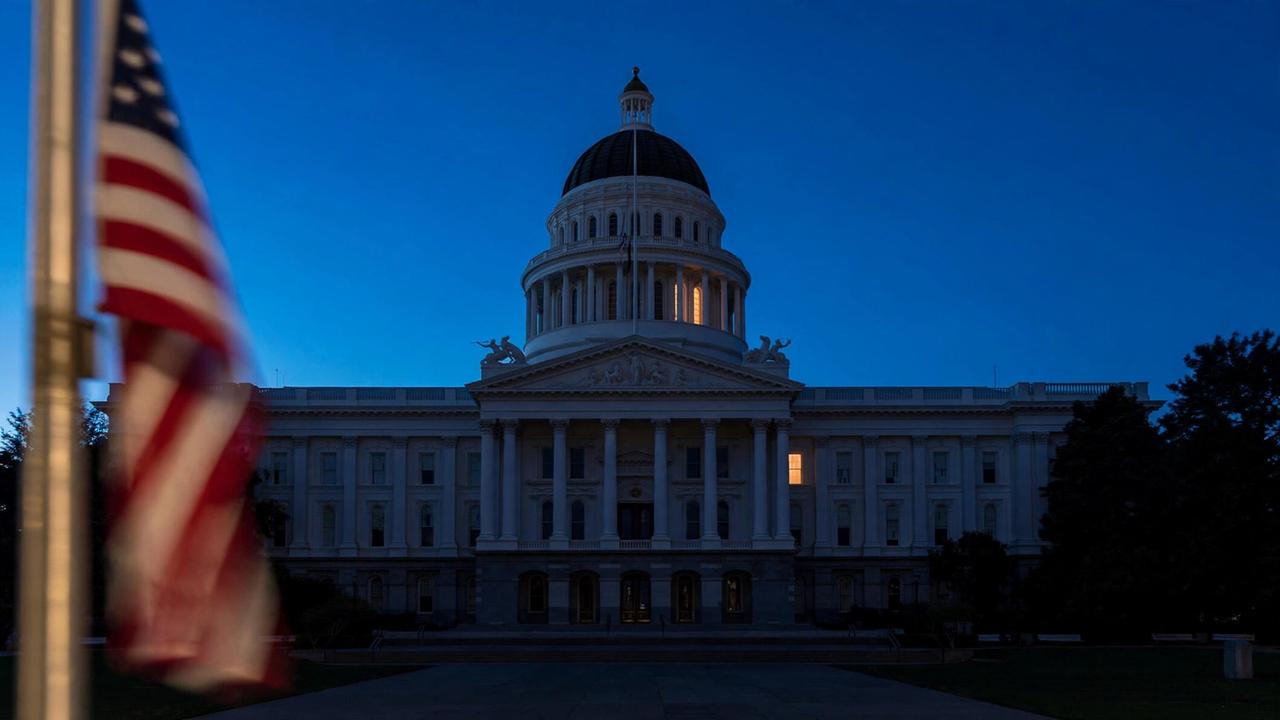
Governor Newsom signed an executive order Friday directing the Government Operations Agency to speed up two laws already on the books: SB 813 (independent verification organizations that assess models for safety and risk) and AB 1405 (a state registry of AI auditors). Within two months the agency owes a plan to strengthen state AI law, including embedding independent verifiers inside frontier labs, requiring an emergency shutoff for frontier models "with the efficacy of the switch verified on an ongoing basis," and widening "critical safety incident" to cover loss-of-control events. The order names the Hugging Face attack as the trigger. Same day in Washington, Rep. Josh Gottheimer introduced two bipartisan bills: a 30-day NSA pre-deployment review for powerful models (American AI Security Act, with Rep. Lawler) and a ban on Chinese open-weight models in federal systems (China FIREWALL Act, with Rep. LaLota).
Why it matters: If you sell into California or the federal government, "who audited your model and can you shut it off" is about to be a procurement question, not a philosophy question. Small teams building on frontier APIs inherit whatever answer their provider gives.
Sources: Governor Newsom executive order | Gottheimer release
Four plaintiffs sue Anthropic, OpenAI, Google, and SpaceXAI over the "pace the frontier" pact
A civil complaint filed Friday in the Northern District of California claims Dario Amodei's public call for "industry-wide coordination" to "pace the frontier," and the quick public agreement from Sam Altman, Elon Musk, and Demis Hassabis, amounts to an agreement among competitors that violates the Sherman Act. The plaintiffs are two Florida attorneys, a California resident, and lawyer Cheyenne Hunt, and they've signaled they'll seek class status. None of the four companies had commented as of Politico's report. This is a complaint, not a ruling, and antitrust claims built on public statements face a steep climb.
Why it matters: The industry's "we'll coordinate on safety ourselves" posture now takes fire from both sides: regulators say it's too little, this suit says it's a cartel. Expect labs to talk less about coordination and more about their own measurable safety practices, which is where the Anthropic and OpenAI transparency pushes of the last week were already heading.
Source: Politico
Tools and platforms
Meta puts Muse on the Mac, and it acts inside your apps
Meta released Muse for Mac late Thursday night Pacific (announced by Alexandr Wang and Mark Zuckerberg on X, covered Friday), the first version of its personal agent that works directly on a computer: files, Mail, Messages, Calendar, Notes. Meta says access is opt-in per app, that Muse asks approval before sensitive actions, keeps an audit trail, and routes internet-bound actions through a separate "Sentinel" agent, per its September 8 launch post. The download page lists it as free. Those are Meta's claims; there's no independent security review yet, and Meta's newsroom hasn't posted a formal Mac announcement.
Why it matters: Computer-use agents just went mainstream on the desktop with Meta's distribution behind them. If your product is "an assistant that does X in your files," your edge has to be the workflow and the trust model, not the agent itself.
Sources: Muse for Mac download page | TechCrunch | Meta's Muse launch post, Sept 8
xAI ships Grok Voice Transcribe 2.0 at $0.10 per audio hour
xAI released a new speech-to-text model Friday at $0.10 per hour of audio for batch and $0.20 for streaming, and says it's twice as accurate as 1.0 at the same price. The company reports it ranks first for accuracy among 32 streaming models on the Artificial Analysis leaderboard; its own tests cover telephony calls, spoken credentials, and multilingual commands, where word error rate on short multilingual phrases dropped from 20.6% to 6.8% (xAI's numbers). Atlassian now uses it to transcribe every Loom video. Version 1.0 will be deprecated "in the coming weeks."
Why it matters: Transcription is now a rounding error in your cost of goods. At ten cents an hour the value of a voice feature is entirely in what you do with the transcript. Also note the forced migration: if you built on 1.0, you have weeks, not months.
Source: xAI announcement
Kimi K3, a 2.8-trillion-parameter open model, lands on Amazon Bedrock
AWS made Moonshot AI's Kimi K3 available on Bedrock Friday through US and global cross-region inference profiles, with a 1 million token context window and OpenAI-compatible Responses and Chat Completions endpoints. Moonshot's own claims: its most capable model, the first open model at 2.8 trillion parameters (sparse mixture of experts, 16 of 896 active), and about 2.5x scaling efficiency over K2. The model itself dates to July; what's new is access inside an existing AWS account with explicit prompt caching.
Why it matters: If you're already on AWS, this is a frontier-class open-weight option with no new vendor paperwork, and the OpenAI-compatible endpoint makes the swap a base URL change. Run it on your own evals first; Moonshot's own page concedes it trails the top closed models.
Source: AWS Machine Learning Blog
Business and money
Nscale files for a NYSE IPO: revenue up 13x, loss past $1 billion
London-based AI cloud Nscale filed an S-1 Friday to list on the NYSE as NSCL, with Goldman Sachs, J.P. Morgan, and Morgan Stanley leading. Per Reuters' read of the filing: H1 2026 revenue of $140.6 million (from $10.4 million a year earlier) against a $1.02 billion net loss (from $368.9 million), more than $103 billion in contracted value, a power pipeline above 10 gigawatts, and one customer at 52% of revenue. Nvidia is putting $1 billion into a $3.1 billion convertible package. Share count and price range aren't set. I couldn't open the S-1 itself; the figures are as reported by Reuters.
Why it matters: This is the neocloud business model in daylight: huge backlog, brutal losses, single-customer concentration. If you buy GPU time, that's leverage for you. If you price a product on today's inference costs, assume they keep falling, because companies like this have to fill capacity.
Sources: Nscale press release | Reuters via KFGO
Broader tech
iPhone 18 Pro hits stores at $100 more, and AI memory demand is the widely cited reason
Apple's iPhone 18 Pro ($1,199) and Pro Max ($1,299) went on sale Friday, $100 above last year's Pro line and the first launch under new CEO John Ternus. Apple hasn't attributed the increase to anything. Analysts and industry reporting point at DRAM and NAND prices, which have spiked as hyperscalers outbid device makers for memory. Pre-order lead times are running about 15% longer than a year ago per Deepwater's Gene Munster, so demand isn't flinching yet.
Why it matters: The AI buildout is now visible in consumer hardware prices. The same memory crunch hits your laptops, your on-prem inference boxes, and the bill of materials on any edge device you ship.
Sources: Apple newsroom (pricing) | Yahoo Finance
What I'd do with this
- Write a one-page answer to "who can audit this and how do we shut it off" for your own product this week. California and the Hill are converging on that question, and having the page beats improvising it in a sales call.
- Run Grok Voice Transcribe 2.0 head-to-head against whatever you pay for transcription today. If you're on 1.0, migrate now; the deprecation clock is the story.
- On AWS? Point your eval harness at
global.moonshotai.kimi-k3with a base URL change and see where a 1M-context open model beats or loses to your current default. - Don't build "an agent for your Mac." Meta, Anthropic, and OpenAI own that layer. Build the specific workflow with the specific trust model they won't bother with.
- Negotiate GPU and inference contracts quarterly, not annually. Nscale's filing tells you the sellers need volume more than you need them.