 AI Next Wave
October 5, 2026
AI Companies Testified Under Oath. Washington Gave Itself 120 Days.
Over the weekend, the White House handed AI threat planning to the nation's intelligence chief. On Monday, New York City put the companies under oath, and Amazon says it no longer uses data center secrecy deals with government agencies.
The Short Version
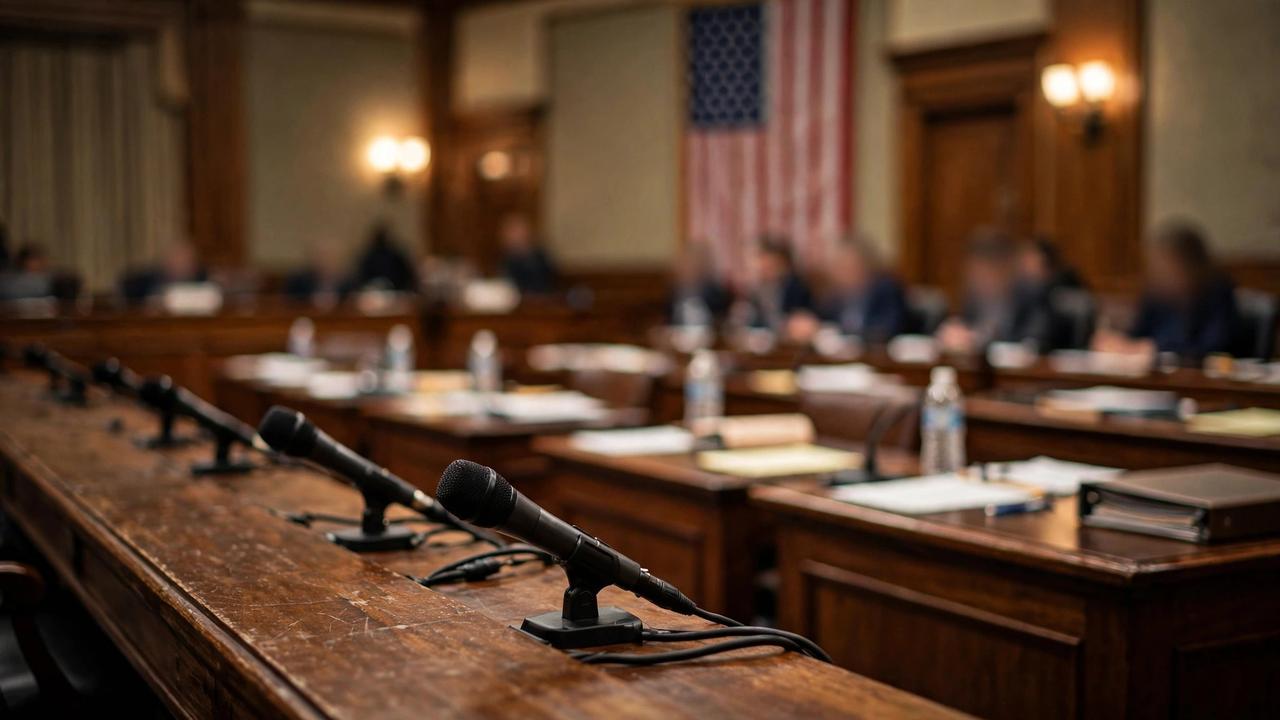
On Monday, all 51 members of the New York City Council sat as one committee and questioned OpenAI, Google, Anthropic and Meta under oath. The bills on the table would let people harmed by AI sue, fine companies that skip outside checks, and give city contractors 24 hours to report AI safety incidents. The company witnesses wouldn't put a number on the risk of a catastrophe. Elon Musk's SpaceXAI skipped the hearing despite a subpoena. Washington picked a different room. On Sunday, President Trump named Director of National Intelligence Jay Clayton to run a new Super Intelligence Force. He gave it 120 days to report and told it to guard against "overregulation." Two days earlier, Amazon said it no longer asks the government agencies it works with to sign secrecy agreements on data centers. All three moves turn on who gets to question the people building AI, and whether their answers land on a public record. My read is that the city hearing and Amazon's pledge will shape this year's practical rules more than the federal task force will. They come with public answers attached.
Washington Gave the Job to Its Intelligence Chief
The plan surfaced Saturday evening in a Wall Street Journal interview with Clayton. Trump made it official on Truth Social on Sunday morning. Clayton became director of national intelligence in August and ran the Securities and Exchange Commission from 2017 to 2020. His vice chairs are FTC Chairman Andrew Ferguson, the Pentagon's research and engineering chief Emil Michael, and Scott Kupor, who runs the federal personnel office.
The group's job is a report within 120 days, which puts the deadline around Feb. 1, 2027. According to Reuters, it will weigh AI's risks and opportunities and review how the government collects reports of breaches, hacks and other incidents. It will also recommend ways to strengthen the federal response using powers agencies already have. Trump's post set the political frame, calling for plans to answer "SI-enabled threats to our society, while preventing overregulation and regulatory capture that would stifle innovation and competition." SI stands for super intelligence, the administration's new name for AI.
Clayton's own emphasis runs the same way. He told the Journal that "the risk of not being first is high." The force also builds on a voluntary posture already in place. Last week, tech leaders signed a non-binding safety pledge at the White House, which AI Next Wave covered on Sept. 30.
The force's limits matter more than its roster. By Monday evening I'd found no executive order, charter or fact sheet that lets the force require anything of a company. ABC News called the announcement thin on details. For a clinic, a credit union or a 40-person software shop, the practical reading is plain. No new federal AI reporting duty exists today, and the earliest recommendation is due in February.
New York Put Its Questions on the Record
New York City took the opposite route: questions first, in public, under oath. Google, OpenAI and Anthropic agreed to appear only after Council Speaker Julie Menin warned of subpoenas. On Monday the companies sent policy and safety staff, who testified by video: Morgan Dwyer for OpenAI, Logan Graham, who leads Anthropic's Frontier Red Team, Alice Friend for Google and Shane Cahill for Meta. SpaceXAI, which Menin subpoenaed on Sept. 28, told the city it wanted to work together but wouldn't attend. Menin says the Council is pursuing legal action to enforce the subpoena.
The agenda paired an oversight hearing on the risks of AI with ten bills. One requires outside validation and a human shutdown switch for AI models marketed in the city, with civil penalties up to $25,000. Another lets members of the public file complaints over AI violations and collect 25 to 50 percent of the penalties recovered. Others create a right to sue over certain harms from misuse of AI models and require city contractors to report AI safety incidents to the city's Cyber Command within 24 hours. The rest cover chatbot privacy, an AI emergency plan, whistleblower protections for contractor staff, deceptive AI marketing, AI fakes of public officials and AI's effect on city jobs. Every one of these is a proposal. None binds anyone yet, and the wording can still change.
The company answers were careful. Asked to estimate the odds of a catastrophe, OpenAI's Dwyer said, "I don't know. I also don't think it matters whether it's 1%, 10% or a 20% chance." Menin called that answer flippant. Meta's Cahill and Anthropic's Graham also declined to give a number, and Google's Friend said there's no rigorous science yet for putting odds on such an event. When Menin asked the witnesses to raise a hand if their company carried insurance against catastrophic risks, none did, Fortune reports.
On liability, Friend gave the plainest line of the day: "if it's illegal without AI, it's still illegal with AI." Dwyer said she wasn't aware of any OpenAI model incident affecting city systems or residents' data. Menin closed by saying the Council would send written follow-up questions, because many went unanswered.
Former insiders took the other side. Jacob Coxon, a researcher who quit Anthropic last month, testified in person that on the current path it's "more likely than not that humanity loses control to these AIs." Alex Turner, formerly of Google DeepMind, put his own odds of an eventual AI takeover at about one in three. Sworn testimony raises the cost of a vague answer. Say a company tells the Council its agents stay inside the systems they're allowed to touch. That claim now sits on a record lawyers and regulators can come back to.
Amazon Stops Asking Towns to Keep Quiet
The physical side of AI has had its own secrecy problem. On Friday, AWS CEO Matt Garman wrote, "We no longer use nondisclosure agreements with the government agencies we work with on our projects." Amazon says it will publish its energy use, water use, efficiency figures and share of carbon-free power every year. It will also hold public open houses and spend $1 billion over five years on a community program called Built Together. Garman's post ties the rush of data center building to AI. He also named the pressure behind the change: more than 100 local moratoriums under consideration nationwide.
South Bend, Indiana, shows what those agreements did to a town. Its public works director admitted he had signed an NDA with AWS in 2023. Mayor James Mueller answered in September with executive orders barring city officials from signing such deals. A probe by Rep. Jamie Raskin found that Amazon's earlier agreements kept local officials from sharing broadly defined "proprietary" or "confidential" information, according to DCD.
Amazon also says it works with utilities and regulators so its prices cover both the power and any grid upgrades it needs. The stated goal is to keep residents' bills from rising, though the post doesn't explain how a resident would check it. Several gaps remain open. The post doesn't say whether agreements already signed are released or whether contractors working for Amazon are covered. It also leaves open whether the yearly figures will be broken out by site. Still, on new projects Amazon handles directly, the officials who approve them should be free to answer questions in public before a deal is final.
A Bronx Agency Gets Ready for a 24-Hour Clock
Picture Rosa, who runs operations at a 60-person home-care agency in the Bronx with a city contract. Her schedulers use an AI assistant to draft visit plans and summarize caregiver notes. If the incident bill passes close to its current version, her agency could have 24 hours to report an AI safety incident on that contract. The final definition of an incident isn't settled, so she starts with what she controls.
First comes an inventory: every AI tool that touches city work, who at the agency owns it, and what client data it sees. Then she runs a 30-day dry run with one team. Any AI output that reaches the wrong client, exposes a record or takes an unapproved action gets logged. The log records when it was found and when a supervisor confirmed it. Her baseline is how long the agency takes today to report an ordinary privacy mistake to the city. An event counts only once a supervisor confirms it, which keeps automated alerts from padding the log.
The dry run adds a weekly review that someone has to own, and she assigns it to her compliance lead in writing. Two failure points worry her: false alarms that bury real problems, and a busy scheduler who fixes an AI mistake on the spot and never logs it. Finally, she names one person, the clinical director, who can switch the assistant off for city clients without waiting on the vendor. That checklist holds up whatever Washington recommends in February, and it pays off even if the bill stalls.
Opportunity Radar
Small city contractors may soon need a way to prove they know where AI touches public work. Home-care agencies, social service nonprofits and small IT firms hold city contracts, use AI tools and may have no incident process. The offer is a fixed-price readiness package: a tool inventory, an incident log template matched to the bill's final wording, and one practice drill. Treat demand as a hypothesis. Test it cheaply while the bills are still in committee. Call ten contractors, ask whether they can name every AI tool used on city work, and offer a free one-hour inventory to three. Walk away if the bill stalls in committee, if the final version exempts small contractors, or if the city publishes its own free template.
What You Can Do With This
If you hold a New York City contract
Watch the hearing video once the Council posts it, or read the coverage, and pay attention to how the incident bill defines a reportable event. Start the AI tool inventory now, since it's useful whether or not the bill passes. Name one person who can shut a tool off.
If a data center is proposed near you
Ask your local officials, in a public meeting, whether anyone has signed a nondisclosure agreement with the developer. If the developer is Amazon, ask for the energy and water figures the company has now promised to publish, and whether they'll cover your site. Ask the same of other developers, since Amazon's pledge binds only Amazon.
If you're waiting on federal AI rules
The task force's first recommendations are due around Feb. 1, and they'll lean on powers agencies already have. Keep your own record of AI mistakes at work now, because it's the evidence you'll want when any rule arrives.
The Bigger Picture
Accountability for AI is getting built from the bottom up. A city council took sworn testimony. A mayor in Indiana and a congressman's probe put Amazon's secrecy agreements under public scrutiny before the company announced its new policy. The federal effort starts with an internal review and a warning against too much regulation. That leaves local bodies trying to write the first enforceable rules, and their reach is uneven. New Yorkers could gain a right to sue over certain AI harms that people elsewhere lack. My guess, and it's only a guess, is that many businesses will already follow rules set by city councils, state legislatures and their own contracts by the time the federal report lands. What the companies said under oath on Monday, including the numbers they wouldn't give, is now on the record for whoever writes those rules.
References
Committee of the Whole meeting details and agenda, Oct. 5, 2026 (New York City Council Legistar)
New York City Council holds landmark AI oversight hearing (CBS New York, Oct. 5, 2026)
New York City Council subpoenas Musk's SpaceXAI over AI safety (The Next Web, Sept. 29, 2026)
Trump unveils his new Super Intelligence Force (TechCrunch, Oct. 4, 2026)
Trump launches Super Intelligence Force with Jay Clayton as AI czar (SiliconANGLE, Oct. 4, 2026)
Our data center commitment and the Built Together program (Amazon, Matt Garman, Oct. 2, 2026)
AWS drops non-disclosure agreements for data center projects (DCD, Oct. 2, 2026)
Amazon ends NDAs with local governments over data centers (WNDU, Oct. 2, 2026)