 AI Next Wave
October 20, 2026
No Power Until the 2030s. So Microsoft Walked Away.
A flagship AI data center outside London lost its anchor customer because the grid can't feed it for years. Within a day, a Melbourne operator froze its shares over a power delay of its own.
The Short Version
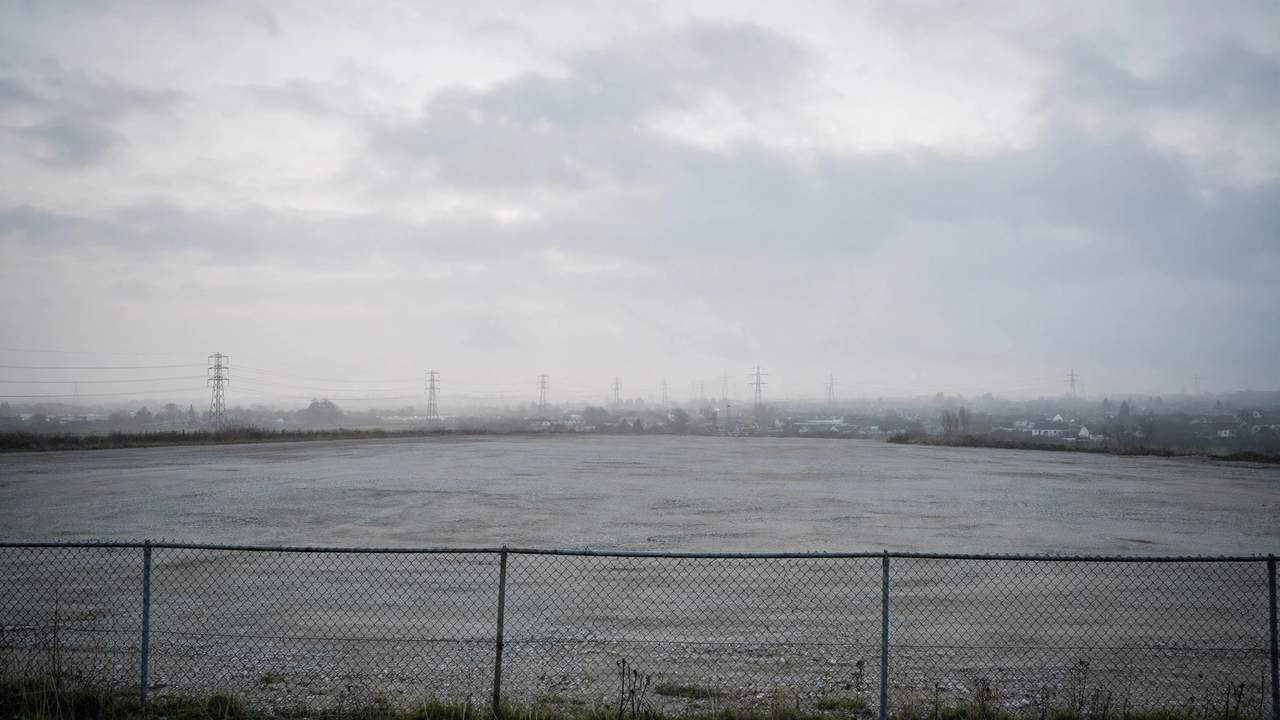
In Loughton, a town on the edge of London, a startup called Nscale cleared an old scaffolding yard to build one of Britain's biggest AI computing sites. It was meant to hold about 23,000 Nvidia chips working for Microsoft's Azure cloud, starting early next year. Then the local grid company said the area couldn't supply enough electricity until the early to mid-2030s. Britain's Telegraph reported Sunday that Microsoft had pulled out, and Microsoft confirmed Monday that it ended the deal for that one site.
Halfway around the world, the Australian operator NextDC halted trading in its shares on Monday, Melbourne time. It needs to work out what a power delay at one of its sites will cost.
My read is that the bottleneck in the AI buildout has moved from chips to wires, and a power date is now something a customer can walk away over. The effect reaches well past London and Melbourne. Maybe you buy cloud services, live near a proposed site, or hold shares in the builders. Either way, the date the electricity arrives now shapes your plans more than the date a building opens.
An Empty Yard in Essex
Nscale announced Loughton in 2025 as a 50-megawatt campus that could grow to 90. It pledged about £2 billion to the build. At full size, the site would draw roughly as much electricity in a year as 315,000 typical British homes, Euronews calculated from regulator figures.
The worst news came in September. UK Power Networks, which runs the local wires, told Nscale it couldn't deliver enough power until the early to mid-2030s. The newsletter The Morning Intelligence first reported that timeline. The grid company has said the site is waiting on upgrades to the national transmission network. Nscale started looking at generating its own power on site and asked whether the connection could be sped up.
Microsoft didn't wait to find out. On Monday it confirmed the deal was over, telling the industry newsletter Blockspace that "this decision relates to a single site." Nscale says its relationship with Microsoft "remains strong and long-term," that the grid problem has no effect on its other contracts, and that it remains committed to Loughton while it looks for other power sources.
That last point carries weight. Loughton was a small slice of a much larger deal for about 200,000 chips across four countries. The largest piece sits on a Texas campus of roughly 240 megawatts. So Nscale keeps its biggest customer. What it lost is the site that was supposed to show Britain could host this kind of computing near London.
Contracts on Paper, Power in the Wires
Loughton exposes a gap that runs through the whole AI building boom. A signed contract for computing power and a building that can actually switch on are two very different assets.
Nscale's own numbers show the size of that gap. Its stock-market filing in September put total contract value at about $103 billion as of August 31, and active contract value at about $2.6 billion, Data Center Knowledge reported. The rest rides on sites still being built. The same filing said Nscale hadn't yet secured binding financing for the chips its Anthropic deals require.
Nscale has company in that position. The crypto investment firm CoinShares tracks bitcoin miners that have moved into AI. It counts more than 4 gigawatts of their capacity under contract and only about 550 megawatts billing customers, CoinDesk reported. Britain's energy regulator, Ofgem, says data centers have requested about 73 gigawatts of grid connections, and it is weighing tougher rules.
Alex Cordovil of the research firm Dell'Oro Group put it in one line: "Capacity that isn't energized generates no revenue, but the costs keep running." For a customer like Microsoft, the math runs the other way. Chips promised for 2027 with power arriving sometime in the early 2030s leave the customer waiting years for computing it needs now, so it shops elsewhere.
A Halt in Melbourne, and Poles on a Quiet Street
The second warning came from Australia. NextDC, a data center company valued near A$7 billion, halted its shares Monday. It promised an update on how a delay in power supply to its M3 Melbourne site will hit the business. The company said its board hadn't yet met to assess the delay and that it expected to announce something within two days.
Analysts at Citi said the delay likely traces to Jemena, the local electricity distributor, pausing work on power lines meant to serve the site. They estimated about A$25 million of NextDC's operating earnings for its 2027 fiscal year could be at risk. NextDC has pitched itself as a builder of "AI factories," purpose-built sites for training and running AI models, and it declined to comment beyond its statement.
ABC News reported that the halt appears linked to a fight on the ground, though NextDC hasn't confirmed it. Residents in Yarraville, in Melbourne's inner west, have opposed 15-meter concrete power poles replacing 7-meter wooden ones on their street. In August, residents blocked equipment, and crews filled in the holes they had dug and left. The local state lawmaker, Katie Hall, wants the lines rerouted or buried. "Seeking social licence alongside meaningful community engagement goes a long way," she said.
Victoria's government had already changed the rules for the next wave. In September it said new data centers must bring their own renewable power and storage for the extra load they add. They must also sit at least 150 meters from homes and cool with something other than drinking water. Premier Ben Carroll summed it up: "Data centres must power themselves, protect homes and pay their way." The rules apply to new projects only, so sites already approved or already in the queue are exempt. The industry group Data Centres Australia called the changes "disappointing."
Texas Asked the Same Question First
American readers have seen a version of this at home. AI Next Wave covered Texas Gov. Greg Abbott's order on Sept. 29: on Sept. 21 he told the state's environmental regulator to issue no permits for data center projects until the grid operator, ERCOT, finishes an audit of every data center in its connection line. The regulator owed the governor's office an update on how it's complying by Monday, Oct. 19. I found no public report of that update this morning, and the pause stays in place until the audit is done.
The scale explains the caution. ERCOT is weighing about 474 gigawatts of new demand requests, more than five times the state's record peak. About 90 percent come from data centers, the law firm Latham & Watkins wrote this month. ERCOT has said it aims to finish the audit by December. Abbott's terms include data centers paying all their own electrical infrastructure costs and helping lower household bills.
Texas, Victoria and Britain have reached the same spot by different roads. Each now treats a data center's power plan as the first thing to check. Texas and Victoria have pushed more of the cost and risk onto the builder, and Britain's regulator is weighing tougher rules of its own.
One Software Firm's Contract Decision
Picture Dana, a made-up but typical operations lead at a 40-person company that sells scheduling software to clinics. She's planning an AI feature for next spring, and a fast-growing cloud provider offers her a discounted three-year contract for reserved computing power in a new facility opening around launch.
Before she signs, she needs three things in writing. Is the facility drawing grid power today? If it's waiting, what date has the utility committed to? And what happens if that date slips? A good contract names a substitute site, says how far away it can be, and lets her leave without penalty if neither is ready by a fixed date.
Her pilot stays small and bounded. For 60 days she runs the feature on the provider's existing, already-powered capacity on a month-to-month plan. Her baseline is what she pays today per thousand AI requests and how long each one takes. She counts a result as accepted only when a request finishes inside her speed target at the agreed price.
The extra work is real. Her finance lead spends a few hours reviewing the contract's power and substitution terms, and someone has to watch the provider's construction updates each month. The plan can fail if the provider moves her to a distant site where responses run slower, or if a cheaper rate disappears once the new building opens. Her chief financial officer holds the authority to walk away, and the trigger is simple: no confirmed power date by the end of the pilot, no three-year deal.
Opportunity Radar
Smaller companies are signing AI computing contracts with providers whose sites may still be waiting on the grid. My hunch is that few of them employ anyone who reads utility filings. The pitch: a fixed-fee power-readiness check before a company signs. You'd confirm whether the named site is energized, find the utility's stated connection date in public filings or planning records, and flag contracts that lack substitution and exit terms. Buyers might be mid-size software firms, hospital systems and the lawyers who review their vendor deals. Test it by offering five free checks to companies negotiating contracts now and counting how many find a gap they'd pay to close. Treat demand as a guess until that test comes back. Walk away if providers start publishing power dates and exit terms as standard practice.
What You Can Do With This
If you buy cloud or AI services for a business
Ask your provider which facility will run your work and whether it's drawing power today. For any capacity promised in the future, get the power date, a named backup site, and an exit clause in the contract.
If a data center is proposed near you
Look at the power plan alongside the building plan. New lines, substations and taller poles can arrive after approval, as Yarraville's residents found, so ask the utility and your council who decides the route and who pays for it.
If you hold shares or funds tied to AI infrastructure
Read how much of a company's backlog is active today versus signed for the future. Nscale's filing showed a gap of roughly 40 to 1, and that gap closes only when the electricity arrives.
If you work in local government or at a utility
Expect more requests to move or bury lines and more pressure to make builders pay for new capacity. Victoria and Texas have both written that cost into their rules, and both offer models to study.
The Bigger Picture
When power decides which sites switch on, the companies that already hold energized buildings gain leverage over everyone still waiting in a utility's queue. That shifts bargaining power toward utilities, regulators and neighbors, the people who control the wires and the streets they run down. It also means AI computing will arrive in bigger, slower and more expensive chunks than the contract totals suggest. My guess, and it is a guess, is that more customers will write power dates and exit terms into their deals over the next year. Where those dates slip, expect more exits like Loughton's. For everyone else, the useful question about any new AI site is the one Loughton answered too late: when does the electricity actually arrive?
References
Reuters via WTVB: Microsoft pulls out of UK data center deal with Nscale, Telegraph reports, Oct. 18, 2026 Data Center Knowledge: Nscale Loses Microsoft Deal as Power Delays Threaten AI, Oct. 19, 2026 Blockspace via Yahoo Finance: Microsoft drops Nscale's Loughton AI data center over interconnection delay, Oct. 19, 2026 CoinDesk: Bitcoin mining offshoot Nscale loses Microsoft AI deal as power delay stretches into 2030s, Oct. 19, 2026 Euronews: UK's biggest AI supercomputer may have to wait until 2030s for enough power, Sept. 29, 2026 The Edge Malaysia (Bengaluru desk): Australia's NEXTDC halts share trading before update on data centre power delay, Oct. 19, 2026 ABC News (Australia): NAB job cuts and NextDC trading halt, live markets blog, Oct. 20, 2026 Business News Australia: NEXTDC unveils plans for $2b AI factory in Melbourne, June 12, 2025 ABC News (Australia): New restrictions on data centre water use, proximity to schools under Victorian strategy, Sept. 22, 2026 Office of the Texas Governor: Governor Abbott Directs TCEQ To Halt Data Center Permits, Sept. 21, 2026 Latham & Watkins, Environment, Land & Resources: Texas Pauses Certain Data Center Approvals Amid Grid, Water, and Community Concerns, Oct. 5, 2026